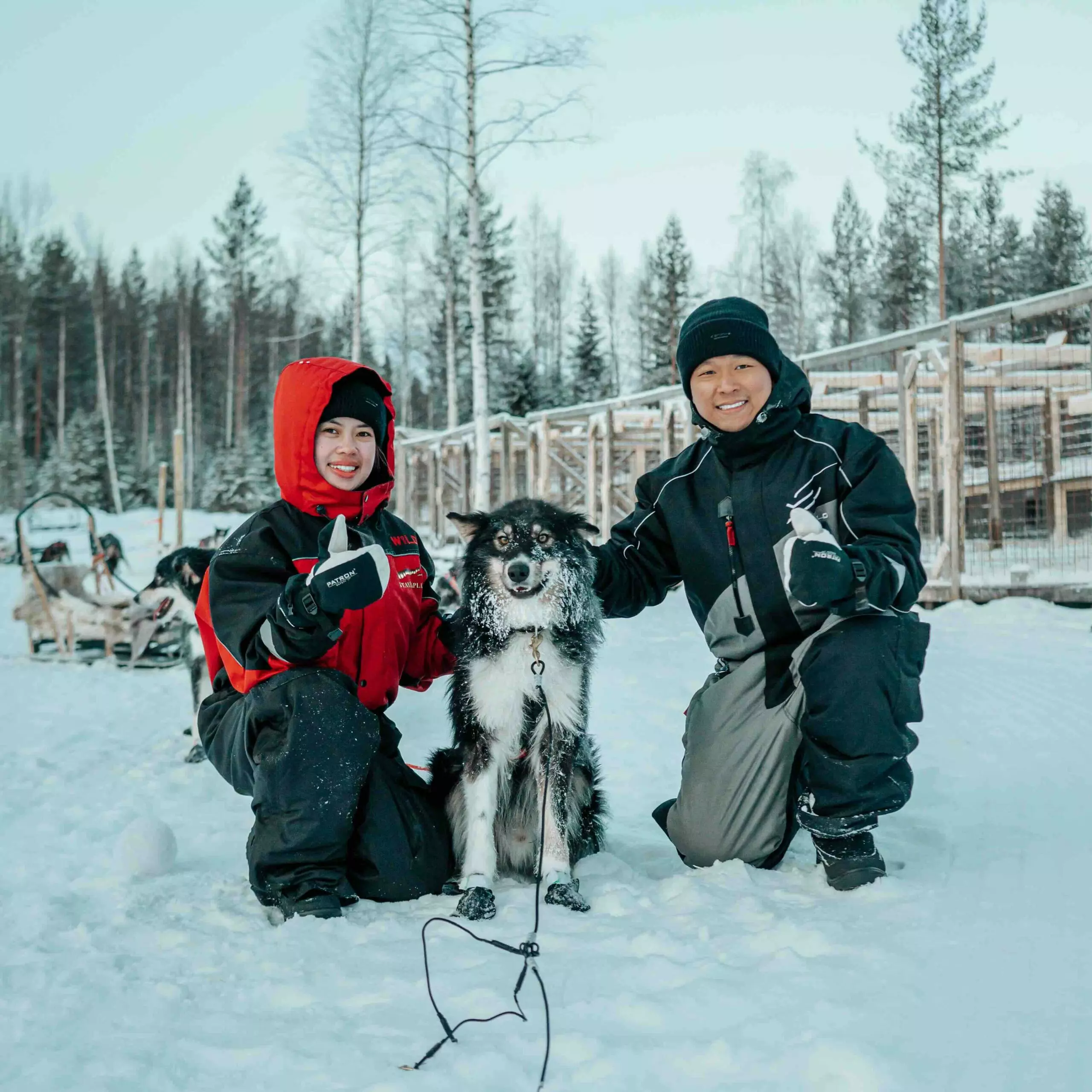
One of the questions guests ask our mushers most often, usually while a team is still barking to go, is simple: what do these dogs actually eat? It is a good question. A husky team pulling a sled through Lapland forest in winter is doing hard physical work in cold air, and that changes what a dog needs compared with a pet on a sofa.
This article explains the sled dog diet in winter in plain terms: why energy and fat matter, why water matters just as much, and what peer-reviewed research on working huskies has measured. We keep the science to what the studies actually found, and we are clear about where our own tour dogs differ from the racing dogs in those studies.
In short: sled dogs in winter need far more energy than ordinary pet dogs, and much of it comes from fat, typically fed as meat and dry food soaked in water so the dogs drink while they eat. A study of three teams in the 2011 Yukon Quest, a race of about 1,600 km, estimated that the dogs needed roughly 9,000 kcal per dog per day just to hold their weight on the first half of the race. Tour dogs running shorter distances need much less, and each kennel feeds its dogs in its own way.
At a glance
- From: 189 €
- Experience type: Husky tour
- Duration: 4 hours
- Difficulty: Easy
- Book in Advance: Cut off: 12 hours before start time
- Included: A Husky Ride 5 Km (Self-driving); Detailed instructions on how to safely mush the Huskies; Information about Huskies; Photos taken with your own device; A Tour Guide in English (other languages available on request: (Spanish, Portuguese, French, Italian, German & Finnish. PLEASE NOTE LIMITED AVAILABILITY FOR OTHER LANGUAGES) If another language is required. Please send us an email or WhatsApp after booking.); Winter clothing (Adult & Child size), overalls, boots & gloves; Cookies and juice; Pick-ups are included in the price within a 10 km radius of Rovaniemi city centre; Between 1 December and 10 January, drop-offs are included only to selected locations: Postmaster Hotel, Rovaniemi City Centre, Ollerovaara area and Santa Claus Village
- Cancellation: Free cancellation 24 hours before the activity. We will charge a cancellation fee of 100% if booking is cancelled less than 24 hours before the activity.
- Accessibility: Not wheelchair accessible; Not stroller accessible
StayLapland · From 189 €
4 hours · Easy · Cut off: 12 hours before start time
#bokun_3fa93ae2_93ba_8124_934e_2c284cd1f6e8 { display: inline-block; padding: 10px 20px; background: #408C3D; border-radius: 5px; box-shadow: none; font-weight: 600; font-size: 16px; text-decoration: none; text-align: center; color: #FFFFFF; border:none; cursor: pointer; transition: background .2s ease; } #bokun_3fa93ae2_93ba_8124_934e_2c284cd1f6e8:hover{ background: #285726; } #bokun_3fa93ae2_93ba_8124_934e_2c284cd1f6e8:active{ background: #30682e; }Why working dogs need so much energy in winter
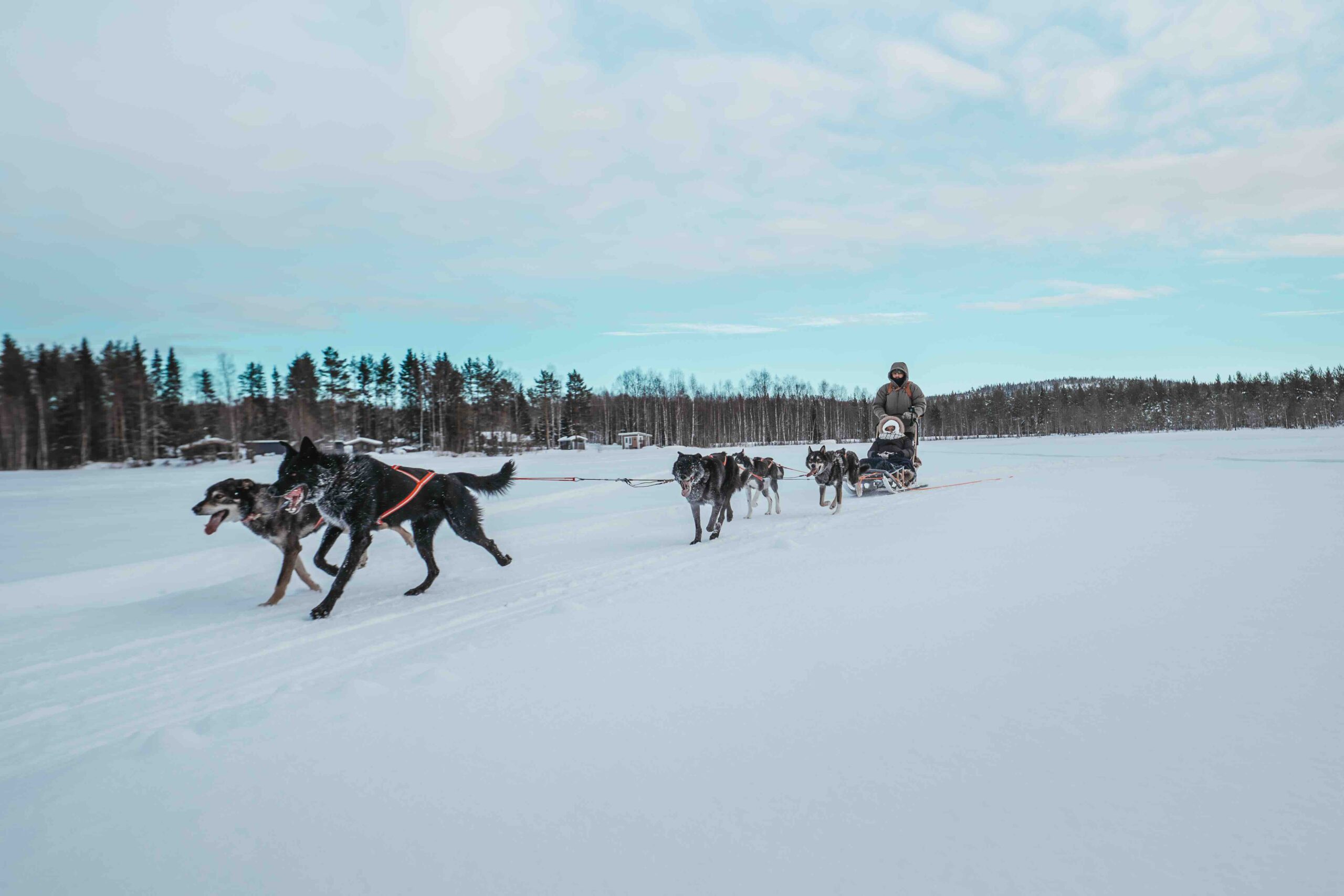
A sled dog uses energy in two main ways on a winter day: the work of running and pulling, and staying warm. The heavier the load, the harder the terrain and the colder the air, the more energy the dog burns.
That is exactly what researchers found when they followed working huskies. In their study of racing sled dogs, Loftus and colleagues concluded that dietary energy requirements “vary substantially” with variables such as load pulled, terrain and ambient temperature. There is no single number that fits every dog, every day.
The practical consequence for a kennel is that feeding changes through the year. A dog that is resting in summer does not need the same amount of food as the same dog in the middle of a busy winter season.
What the research measured: calories
The most detailed field numbers come from endurance racing, because that is where dogs work hardest and where researchers can follow them over many days.
- The study followed three teams in the 2011 Yukon Quest, a race of about 1,600 km between Whitehorse in Yukon and Fairbanks in Alaska, with 14 Alaskan huskies per team at the start.
- On the first leg, with temperatures between about −23 °C and −12 °C, the researchers calculated that about 8,995 kcal per dog per day was needed for the dogs to maintain their weight.
- On the second, more mountainous leg, with temperatures between about −40 °C and −18 °C, all three teams lost weight, and the extrapolated requirement rose to roughly 13,800 kcal per dog per day.
These are figures for elite racing dogs covering long distances every day. They show how high the ceiling can go, not what a dog on a short tour eats.
Why fat is the main fuel
Fat is the most energy-dense part of any diet, which is why it plays such a large role for working dogs: it lets a dog take in a lot of energy without having to eat an enormous volume of food.
In the Yukon Quest study, about 47% of the energy in the teams’ diets during the first half of the race came from fat, and the share was higher during the second leg. The authors also noted that the carbohydrate in these diets suggests working sled dogs may eat slightly less fat than earlier estimates assumed, which is a good reminder that the science is still being refined.
Protein matters too, for muscle maintenance and recovery, but in winter it is the energy from fat that does most of the heavy lifting.
StayLapland · From 59 €
Arctic Paws — 2 km Family-Friendly Husky Ride at Lapland Winter Park
Easy · Cut off: 15 minutes before start time
#bokun_c3d52328_6e2b_1bb3_9487_70ba85df26aa { display: inline-block; padding: 10px 20px; background: #408C3D; border-radius: 5px; box-shadow: none; font-weight: 600; font-size: 16px; text-decoration: none; text-align: center; color: #FFFFFF; border:none; cursor: pointer; transition: background .2s ease; } #bokun_c3d52328_6e2b_1bb3_9487_70ba85df26aa:hover{ background: #285726; } #bokun_c3d52328_6e2b_1bb3_9487_70ba85df26aa:active{ background: #30682e; }Water: the part people forget
Hard work in winter still costs a dog a lot of water. Dogs will happily eat snow, but mushers do not rely on snow alone; they make sure their dogs drink.
A study by Stephens-Brown and Davis, published in the Journal of Veterinary Internal Medicine in 2018, measured how much water working dogs turn over each day. In 16 Alaskan huskies running a 222 km stage race in cold conditions, daily water turnover was about 6.6 litres per dog, roughly 44% of the water in their bodies every day. Working Labradors in the same paper, doing lighter work in warm conditions of 21–29 °C, turned over about 4.6 to 4.9 litres a day.
The authors concluded that water needs follow work intensity more than anything else. In other words, a hard-working husky in the cold can need more water than a dog working in summer heat.

How mushers get food and water into a dog
The racing teams in the Yukon Quest study were fed meat and dry food mixed with water, twice a day, together with frequent snacks of raw meat. Soaking the food is a simple trick: it gets water into the dog at the same time as the calories, which is useful when dogs might not drink enough plain water in the cold.
How this looks day to day varies from kennel to kennel. Our partners at Kuoksa Husky Park put it well on our site: “There are as many different ways of raising, training and feeding sled dogs as there are kennels.” What every good kennel has in common is that feeding is adjusted to the individual dog, its body condition and its workload.
How this shows up on our tours
Our husky tours at Kuoksa Husky Park are run with Tails Ahead Sleddogs, the kennel of Bent and Delia, at Kuoksa Husky Park from November until April. Delia trained as a veterinary technician and keeps herself updated through books and veterinary seminars specifically about sled dogs, and Bent has worked with sled dogs for many years. They describe daily care for the dogs as “the cornerstone” of their life.
Our tour dogs do not run 1,600 km races. On the Nulkki Husky Adventure (from 189 €, 4 hours) you drive your own sled for 5 km through the Kuoksajärvi forest, after detailed instructions from the musher and information about the huskies. So please treat the racing figures above as background science, not as a description of our dogs’ menu. If you want to know how our mushers feed their teams, ask them on the day: information about the huskies is part of the tour.
For a shorter first meeting with the dogs there is Arctic Paws at Lapland Winter Park, a guide-driven ride of about 2 km, and for a longer day the Kuoksa Husky & Reindeer Adventure combines a 5 km husky ride with a reindeer sleigh ride and salmon soup in a teepee. You can see all our husky tours in Rovaniemi and other activities on our site.
Why the dogs’ welfare sets the limits of a tour
Feeding is only one part of looking after working dogs. Our product pages also set out when a tour changes or stops for the sake of the dogs and guests:
- On the Nulkki Husky Adventure, the temperature limit is −35 °C, and −25 °C for small children.
- In bad weather, the tour can be arranged as a shortened, guide-driven experience for safety.
- The tour may be cancelled or rescheduled in extreme weather conditions.
We write more about the dogs themselves in our article on the Alaskan husky and about our winter programme in our husky tours for 2026–2027.
Frequently asked questions
What do sled dogs eat in winter?
Working sled dogs eat an energy-dense diet with a lot of fat, typically meat and dry dog food, often soaked in water. The exact diet differs from kennel to kennel and is adjusted to each dog’s workload.
How many calories does a sled dog need?
It depends heavily on the work, terrain and temperature. In a study of the 2011 Yukon Quest race, dogs needed about 9,000 kcal per day to hold their weight on the first leg. Tour dogs running short distances need far less.
Do sled dogs just eat snow for water?
Dogs do eat snow, but mushers make sure they drink, often by soaking their food in water. Research on huskies in a cold stage race measured a water turnover of about 6.6 litres per dog per day.
Are your tour dogs fed like racing dogs?
No. Our tour dogs run much shorter distances than race dogs. Our mushers at Kuoksa Husky Park feed their dogs according to their own kennel routine; ask them on the tour and they will tell you.
Can I learn about the dogs on the tour?
Yes. The Nulkki Husky Adventure includes information about the huskies and detailed instructions on how to safely mush them.
When do your husky tours run?
Our partners organise the dog sledding tours at Kuoksa Husky Park from November until April. Available dates are shown in the booking calendar.
Ready to book?
StayLapland · From 189 €
4 hours · Easy · Cut off: 12 hours before start time
#bokun_4b3ca8d5_ad24_54bd_cf53_9fae52099920 { display: inline-block; padding: 10px 20px; background: #408C3D; border-radius: 5px; box-shadow: none; font-weight: 600; font-size: 16px; text-decoration: none; text-align: center; color: #FFFFFF; border:none; cursor: pointer; transition: background .2s ease; } #bokun_4b3ca8d5_ad24_54bd_cf53_9fae52099920:hover{ background: #285726; } #bokun_4b3ca8d5_ad24_54bd_cf53_9fae52099920:active{ background: #30682e; } #bokun_72198131_8a2a_ad28_6ee1_dccb0312fe84 { display: inline-block; padding: 10px 20px; background: #408C3D; border-radius: 5px; box-shadow: none; font-weight: 600; font-size: 16px; text-decoration: none; text-align: center; color: #FFFFFF; border:none; cursor: pointer; transition: background .2s ease; } #bokun_72198131_8a2a_ad28_6ee1_dccb0312fe84:hover{ background: #285726; } #bokun_72198131_8a2a_ad28_6ee1_dccb0312fe84:active{ background: #30682e; }Questions about our huskies? Email booking@staylapland.com or send us a WhatsApp message on +358 40 128 7846.
You may also like
- Arctic Paws — 2 km Family-Friendly Husky Ride at Lapland Winter Park — from 59 €
- Kuoksa Husky & Reindeer Adventure — from 349 €, 5 hours
Sources
- Loftus J.P. et al. (2014), Energy requirements for racing endurance sled dogs, Journal of Nutritional Science
- Stephens-Brown L. & Davis M. (2018), Water requirements of canine athletes during multi-day exercise, Journal of Veterinary Internal Medicine