Many of our guests arrive in Rovaniemi curious about the Sámi, the Indigenous people of the north. Some have seen images of colourful traditional dress; some expect every reindeer farm to be a Sámi one. We think the most respectful thing we can do as a local operator is to point you to what the Sámi themselves say, and to be clear about what our own tours are and are not.
Everything on this page about Sámi people, languages and tourism comes from the Sámi Parliament of Finland and other official Finnish sources, listed at the end.
The Sámi are the only Indigenous people in the European Union, and their status is written into the Constitution of Finland. About 10,000 Sámi live in Finland, and more than 60 percent of them live outside the Sámi homeland in the far north. The Sámi Parliament’s visitor guidance asks you, in short, to be a guest: enter homes only when invited, do not expect people to wear Sámi dress for tourists, never frighten reindeer, and favour Sámi-owned products and services.
At a glance
- From: 159 €
- Experience type: Reindeer tour
- Duration: 3 hours
- Difficulty: Very easy
- Book in Advance: Cut off: 12 hours before start time
- Included: 2-3 km reindeer safari in the forest of Lapland; Information about the life of reindeer, reindeer farm and reindeer herding in general; A Tour Guide in English (other languages available on request: (Spanish, Portuguese, French, Italian, German & Finnish. PLEASE NOTE LIMITED AVAILABILITY FOR OTHER LANGUAGES) If another language is required. Please send us an email or WhatsApp after booking.); Winter clothing (Adult & Child size), overalls, boots, gloves, socks; Cookies and juice; Photos taken with your own device; Pick-ups are included in the price within a 10 km radius of Rovaniemi city centre; Between 1 December and 10 January, drop-offs are included only to selected locations: Postmaster Hotel, Rovaniemi City Centre, Ollerovaara area and Santa Claus Village; Air conditioned car
- Cancellation: Free cancellation 24 hours before the activity. We will charge a cancellation fee of 100% if booking is cancelled less than 24 hours before the activity.
- Accessibility: Not wheelchair accessible; Not stroller accessible
StayLapland · From 159 €
3 hours · Very easy · Cut off: 12 hours before start time
Who the Sámi are
The Sámi Parliament of Finland describes the Sámi as the only Indigenous people in the European Union. Sámi homelands, often called Sápmi, stretch across four countries: Finland, Sweden, Norway and Russia. According to finland.fi, the total Sámi population is more than 75,000.
In Finland, the Sámi Parliament gives the figure of about 10,000 Sámi, and notes that more than 60 percent of them live outside the Sámi homeland, many in Finland’s cities. Sámi life today is modern, varied and lived in many places; it is not a costume or a show put on for visitors.
Three Sámi languages are spoken in Finland
Three Sámi languages are spoken in Finland: Northern Sámi, Inari Sámi and Skolt Sámi. The Sámi Parliament estimates roughly 2,000 speakers of Northern Sámi in Finland, about 400 of Inari Sámi and about 300 of Skolt Sámi. They are separate languages, not dialects of one another.
If you travel north towards Inari, you will see Sámi place names on road signs next to Finnish ones. That is a small, everyday reminder that the landscape has its own names and history.
Where the Sámi homeland is, and where Rovaniemi fits
In Finland, the Sámi homeland is defined as the municipalities of Enontekiö, Inari and Utsjoki, together with the northern part of the municipality of Sodankylä. Rovaniemi, where most of our tours start, lies outside this area.
Our Eight Seasons Inari suites, on the other hand, are inside the Sámi homeland. Guests who stay there are staying in a place that the Sámi Parliament’s guidance describes as home to the local Sámi people, and we ask them to keep the guidance below in mind. You can read more about that stay in the eight seasons of Lapland and the idea behind Eight Seasons Inari.
What the Sámi Parliament asks of visitors
The Sámi Parliament publishes a visitor guide to the Sámi homeland. Its main points are simple, and we pass them on to our guests:
- Private homes are private. Enter the sphere of domestic privacy only as an invited guest. That includes reindeer fences near houses.
- Sámi dress is not a costume. Private persons do not wear Sámi dress for tourists. The gákti is worn by community members at celebrations and in daily life.
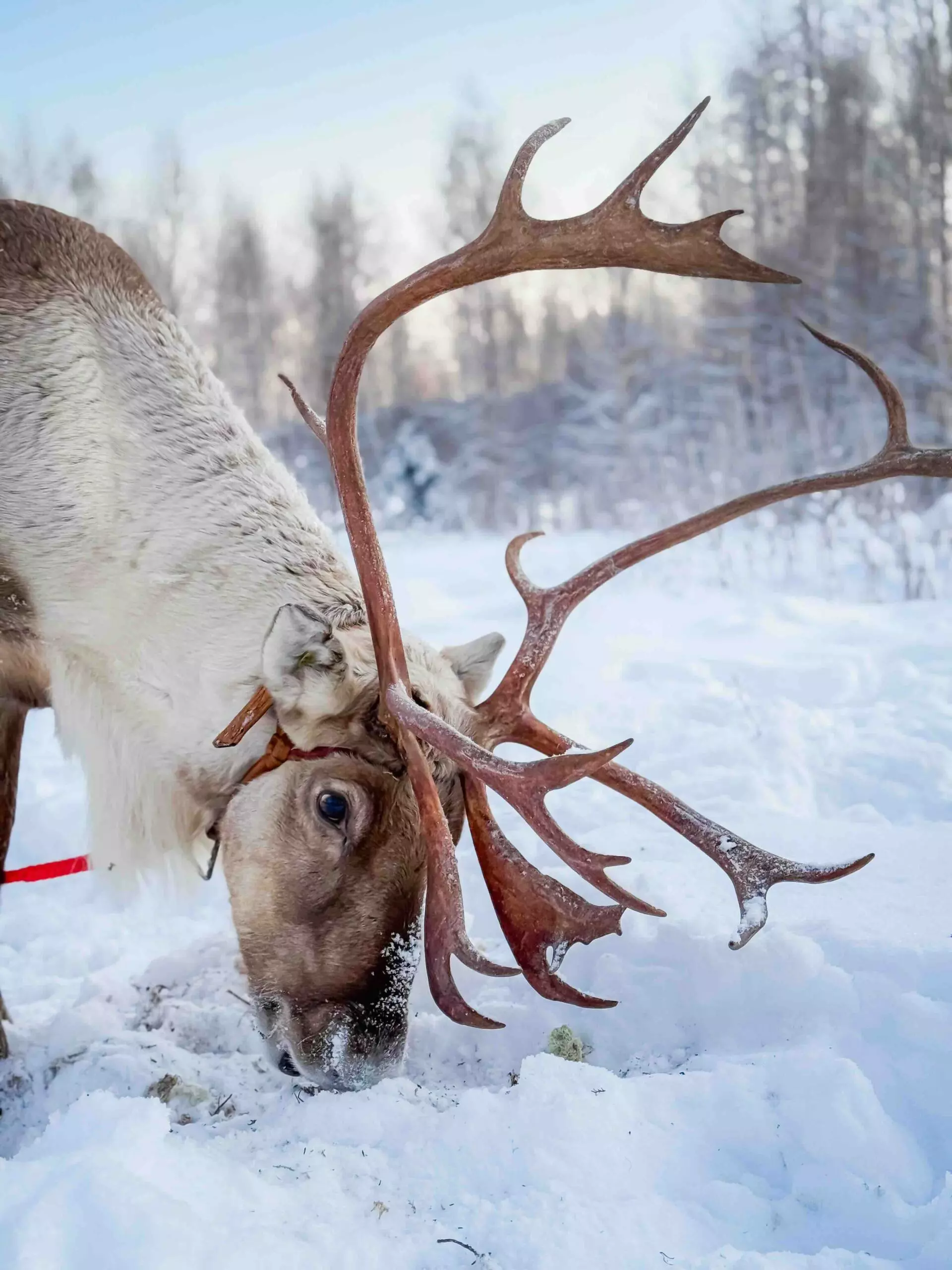
- Do not frighten reindeer. The guidance points out that it is legally prohibited, and that you should get to know reindeer only with the guidance of their owner.
- Livelihoods are not attractions. Traditional livelihoods can be explored only as an invited and guided guest.
- The wilderness is someone’s home. In the guide’s words, untouched wilderness does not exist in the Sámi homeland, even if it may seem so to an outsider.
- Buy Sámi. Consume responsibly by favouring Sámi products and services.
- Leave stereotypes at home. Come with an open mind and learn through Sámi voices.
StayLapland · From 159 €
3,5 hours · Easy · Cut off: 8 hours before start time
The ethical guidelines for Sámi tourism
On 24 September 2018 the Sámi Parliament of Finland adopted its principles for responsible and ethically sustainable Sámi tourism. Their aim is to end tourism that exploits Sámi culture and to correct inaccurate, primitivised images of the Sámi. The principles ask tourism companies to recognise the value of Sámi cultural heritage, to work with Sámi communities in ways that benefit both sides, and to market themselves responsibly.
The guidelines also name practices that have been borrowed into Lapland tourism without belonging to Sámi culture. One example they give is dog sledding, which they note conflicts with reindeer herding. We run husky tours at Kuoksa, and we want to be clear: husky sledding is not a Sámi tradition, and we do not present it as one.
Reindeer herding in Finland is not only Sámi
Reindeer are central to Sámi culture, but in Finland reindeer herding is not limited to the Sámi. As our reindeer information page explains, herding is an exclusive Sámi right in Sweden and Norway, while in Finland it is also practised by Finnish herders. The livelihood is governed by the Reindeer Husbandry Act (848/1990), and according to the Reindeer Herders’ Association the herding area covers 122,936 square kilometres, 36 percent of Finland.
This is why a reindeer farm near Rovaniemi is not automatically a Sámi farm. The seasons of that work, from calf marking to the autumn round-up, are described in our articles on the reindeer year and the reindeer roundup in Finland.
How this shows up on our tours
Our reindeer tours run at Kuoksa Reindeer Stories at Kuoksajärvi. The farm’s story is that of a Finnish reindeer-herding family: its founder, Jouni, comes from Savukoski, about 200 kilometres north-east of Rovaniemi, where reindeer herding has been passed down through generations of his family, and his grandfather was a Chief of District in the Kemin-Sompio Reindeer Herding Cooperative. Most of the family’s reindeer live out in the forest all year; the trained working reindeer are at Kuoksajärvi.
On the Kuoksa Reindeer Adventure (from 159 €, 3 hours), you get a 2–3 km reindeer safari through the forest and information about the life of reindeer, the reindeer farm and reindeer herding in general. What we share is reindeer herding as this family practises it. It is not a Sámi cultural performance, and if you want to learn about Sámi culture, the best teachers are Sámi people and institutions, starting with the Sámi Parliament’s visitor guide.
The same farm runs Ice Fishing with Reindeer (from 159 €, 3,5 hours) and the evening Northern Lights Tour Reindeer Safari (from 179 €, 3,5 hours).
Dates worth knowing
- 6 February: Sámi National Day. It commemorates the first cross-border Sámi congress, held in Trondheim, Norway.
- 2 March: the Sámi Parliament of Finland. It was established in 1996. Its 21 members and 4 deputies are elected from among the Sámi every four years.
- The Sámi flag was adopted in 1986. According to finland.fi, its red half-circle represents the sun and its blue half-circle the moon.
Frequently asked questions
Is Rovaniemi part of the Sámi homeland?
No. In Finland the Sámi homeland is defined as the municipalities of Enontekiö, Inari and Utsjoki and the northern part of Sodankylä. Rovaniemi lies outside it, although Sámi people live in Rovaniemi too.
How many Sámi live in Finland?
The Sámi Parliament of Finland gives a figure of about 10,000, and more than 60 percent of them live outside the Sámi homeland.
Is your reindeer farm a Sámi farm?
Kuoksa Reindeer Stories tells the story of a Finnish reindeer-herding family from Savukoski. In Finland reindeer herding is practised by both Sámi and Finnish herders. Our tours share reindeer herding as this family practises it, not Sámi culture.
Can I take photos of Sámi people in traditional dress?
The Sámi Parliament’s guidance says private persons do not wear Sámi dress for tourists. As with anyone, ask before photographing a person, and remember that homes and private life are not part of a visit unless you are invited.
Is husky sledding a Sámi tradition?
No. The Sámi Parliament’s ethical guidelines name dog sledding as a practice that is not part of Sámi culture. We run husky tours at Kuoksa and do not present them as Sámi.
Where can I learn more about Sámi culture?
Start with the Sámi Parliament of Finland and its responsible visitor guide, linked in the sources below.
Ready to book?
StayLapland · From 159 €
3 hours · Very easy · Cut off: 12 hours before start time
Questions about our reindeer tours? Email booking@staylapland.com or WhatsApp +358 40 128 7846.
You may also like
- Ice Fishing with Reindeer — from 159 €, 3,5 hours
- Northern Lights Tour Reindeer Safari — from 179 €, 3,5 hours
Sources
- The Sámi Parliament of Finland — About us
- The Sámi Parliament of Finland — Ethical Guidelines for Sámi Tourism
- Responsible Visitors’ Guide to the Sámi Homeland — Visitor guidance (Sámi Parliament)
- thisisFINLAND — Integral to the culture, Sámi languages stay vibrant in Finland
- Reindeer Herders’ Association (Paliskuntain yhdistys) — Reindeer herding