Guests at our tours often hear our guides say Joulupukki and ask what it means. It is simply the Finnish name for Santa Claus — but the word carries a much older story than the red suit suggests.
Here in Rovaniemi we live next door to Santa’s official hometown, so we have gathered the facts from trusted Finnish sources: where the name comes from, how the character changed, why Finns say he lives on Korvatunturi, and how a Finnish Christmas Eve visit from Joulupukki actually goes.
In short: Joulupukki is the Finnish Santa Claus. The word means “Christmas goat” and goes back to old folk customs in which a horned, fur-clad goat figure visited homes around Christmas. Finnish tradition says Joulupukki lives on Korvatunturi, a remote fell in Lapland, and he can be met every day of the year at Santa Claus Village on the Arctic Circle in Rovaniemi.
At a glance
- From: 169 €
- Experience type: Santa Claus Village / Culture tour
- Duration: 5 hours
- Difficulty: Very easy
- Book in Advance: Cut off: 4 hours before start time
- Included: A Tour Guide in English (other languages available on request: (Spanish, Portuguese, French, Italian, German & Finnish. PLEASE NOTE LIMITED AVAILABILITY FOR OTHER LANGUAGES) If another language is required. Please send us an email or WhatsApp after booking.); Winter clothing (Adult & Child size), overalls, boots & gloves; Meeting Santa Claus himself!; Local lunch; Pick-ups and drop-offs are included in the price in 10 km radius from Rovaniemi city center; Photos taken with your own device; Air conditioned car
- Cancellation: We will charge a cancellation fee of 15% if the booking is cancelled 15 days or less before the event. Otherwise, the standard cancellation policy is 24 hours before the event, after which the remaining amount is also non-refundable.
- Accessibility: Not wheelchair accessible; Not stroller accessible
StayLapland · From 169 €
5 hours · Very easy · Cut off: 4 hours before start time
#bokun_44384066_e642_c074_87c2_8c9d64851e08 { display: inline-block; padding: 10px 20px; background: #408C3D; border-radius: 5px; box-shadow: none; font-weight: 600; font-size: 16px; text-decoration: none; text-align: center; color: #FFFFFF; border:none; cursor: pointer; transition: background .2s ease; } #bokun_44384066_e642_c074_87c2_8c9d64851e08:hover{ background: #285726; } #bokun_44384066_e642_c074_87c2_8c9d64851e08:active{ background: #30682e; }Book Early the Activities for Winter 2026–2027 – Save 10% with code EARLY27 01.11.2026–31.03.2027 (Excludes husky & reindeer tours)
What does Joulupukki mean?
Joulu is Finnish for Christmas and pukki means a billy goat, so joulupukki literally means “Christmas goat”. This is Finland’s official promotional site, thisisFINLAND, putting it plainly: the Finnish word for Santa Claus means “Christmas goat”.
That can sound odd to visitors who picture a jolly man with reindeer. The explanation lies in Finnish folk tradition, long before Santa wore red.
From goat figure to friendly Santa
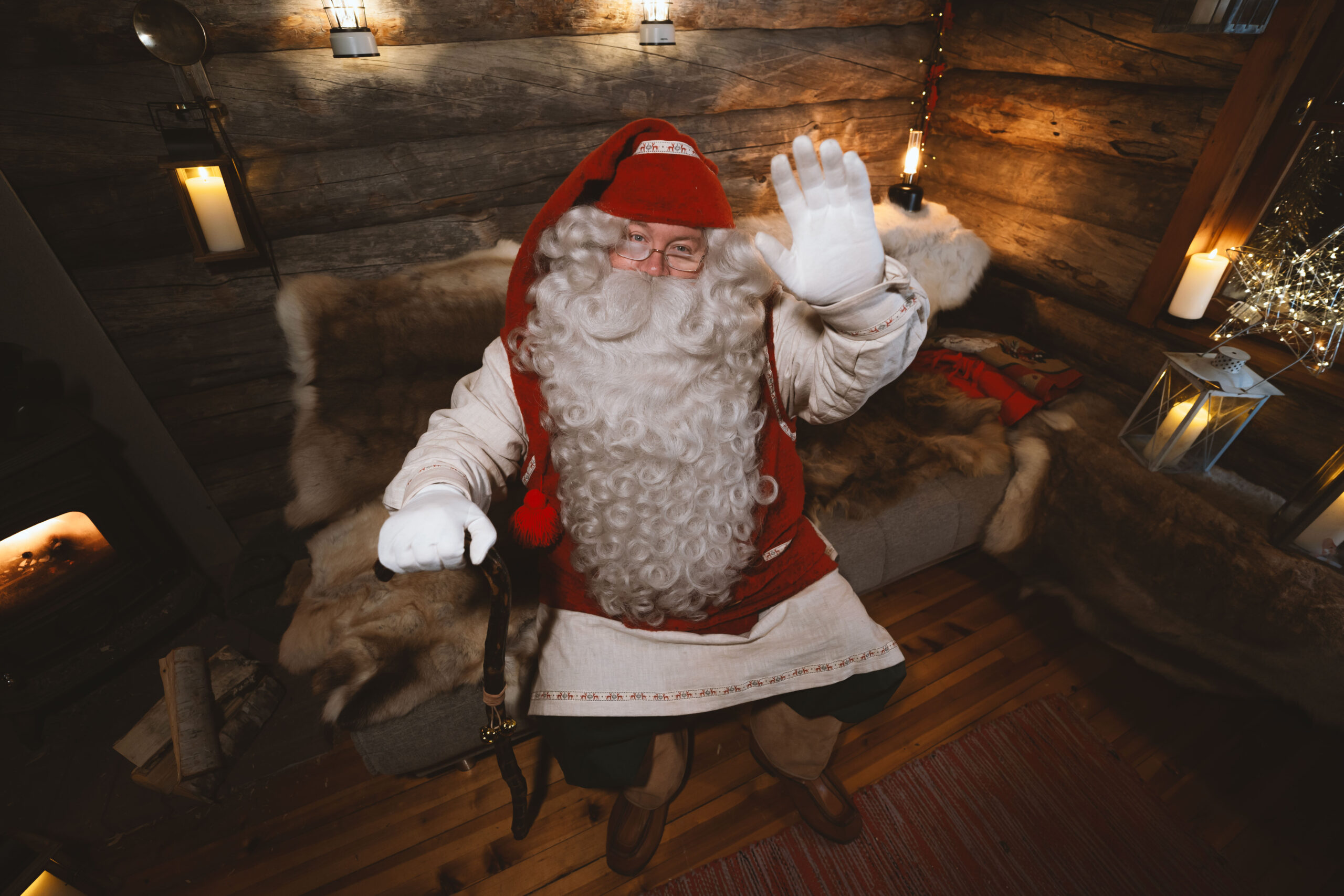
According to thisisFINLAND, Joulupukki has its roots in old pagan traditions, including the nuuttipukki — a horned figure dressed in furs who visited homes after Christmas. Finland’s public broadcaster Yle describes the nuuttipukki as a spirit in the shape of a goat that demanded gifts and leftover food on St Knut’s Day, 13 January, with men in fur jackets, birch-bark masks and horns going from door to door.
The early Christmas visitor was not especially cuddly either. Yle notes that Santa used to arrive in a fur coat with the aim of scaring children before handing out a single gift, and thisisFINLAND says that in the old days he wore dark robes and looked a bit scary. It was only in the early 1900s that he became the cheerful, red-suited figure known today.
Why Joulupukki lives on Korvatunturi
Ask a Finnish child where Santa lives and the answer is Korvatunturi — “Ear Fell” — a remote peak in Finnish Lapland, north of the Arctic Circle. Visit Finland explains that Santa hails from this mysterious fell, and Visit Rovaniemi calls it the mysterious fell said to be Santa Claus’ original home.
The idea spread thanks to radio. Yle recounts that the radio host Markus Rautio declared on air in 1927 that Santa’s workshop was located on Korvatunturi, and the story stuck. Korvatunturi is deep in the Lapland wilderness, which is why Santa meets his visitors in Rovaniemi.
StayLapland · From 249 €
1,5 hours · Very easy · Cut off: 12 hours before start time
#bokun_02606c08_4f67_20bf_2acc_130917c15f5c { display: inline-block; padding: 10px 20px; background: #408C3D; border-radius: 5px; box-shadow: none; font-weight: 600; font-size: 16px; text-decoration: none; text-align: center; color: #FFFFFF; border:none; cursor: pointer; transition: background .2s ease; } #bokun_02606c08_4f67_20bf_2acc_130917c15f5c:hover{ background: #285726; } #bokun_02606c08_4f67_20bf_2acc_130917c15f5c:active{ background: #30682e; }Book Early the Activities for Winter 2026–2027 – Save 10% with code EARLY27 01.11.2026–31.03.2027 (Excludes husky & reindeer tours)
Rovaniemi, the Arctic Circle and Santa’s office
Visit Rovaniemi tells the story that in 1985 Santa Claus decided to establish an office in Rovaniemi. Today Santa Claus Village sits right on the Arctic Circle, a short drive from the city centre. Entrance to the village is free, and Santa can be visited every day of the year.
The village also houses Santa Claus’s Main Post Office, whose official address is 96930 Napapiiri. thisisFINLAND reports that it receives hundreds of thousands of letters from more than 190 countries every year, and Visit Rovaniemi notes that every letter and card is stamped with a special Santa Claus postmark. If you plan to write a card on your visit, see how our guided Santa Claus Village Tour works.
Christmas Eve: when Joulupukki knocks on the door
In many countries Santa comes down the chimney at night. In Finland he usually comes in person on Christmas Eve, 24 December. thisisFINLAND describes how Santa often knocks on the door and asks: “Are there any well-behaved children here?” — in Finnish, Onko täällä kilttejä lapsia?
Joulupukki has help. His lifelong companion is Joulumuori (“Mother Christmas”), and they work with a team of hardworking elves in Lapland. According to Visit Rovaniemi, Santa sets off from the Arctic Circle one day early, on 23 December, to begin delivering presents.
Other Christmas Eve customs described by Yle include rice porridge in the morning with a single almond hidden in it for luck, and the tradition of lighting candles on family graves, which became a national custom after the Second World War.
How this shows up on our tours
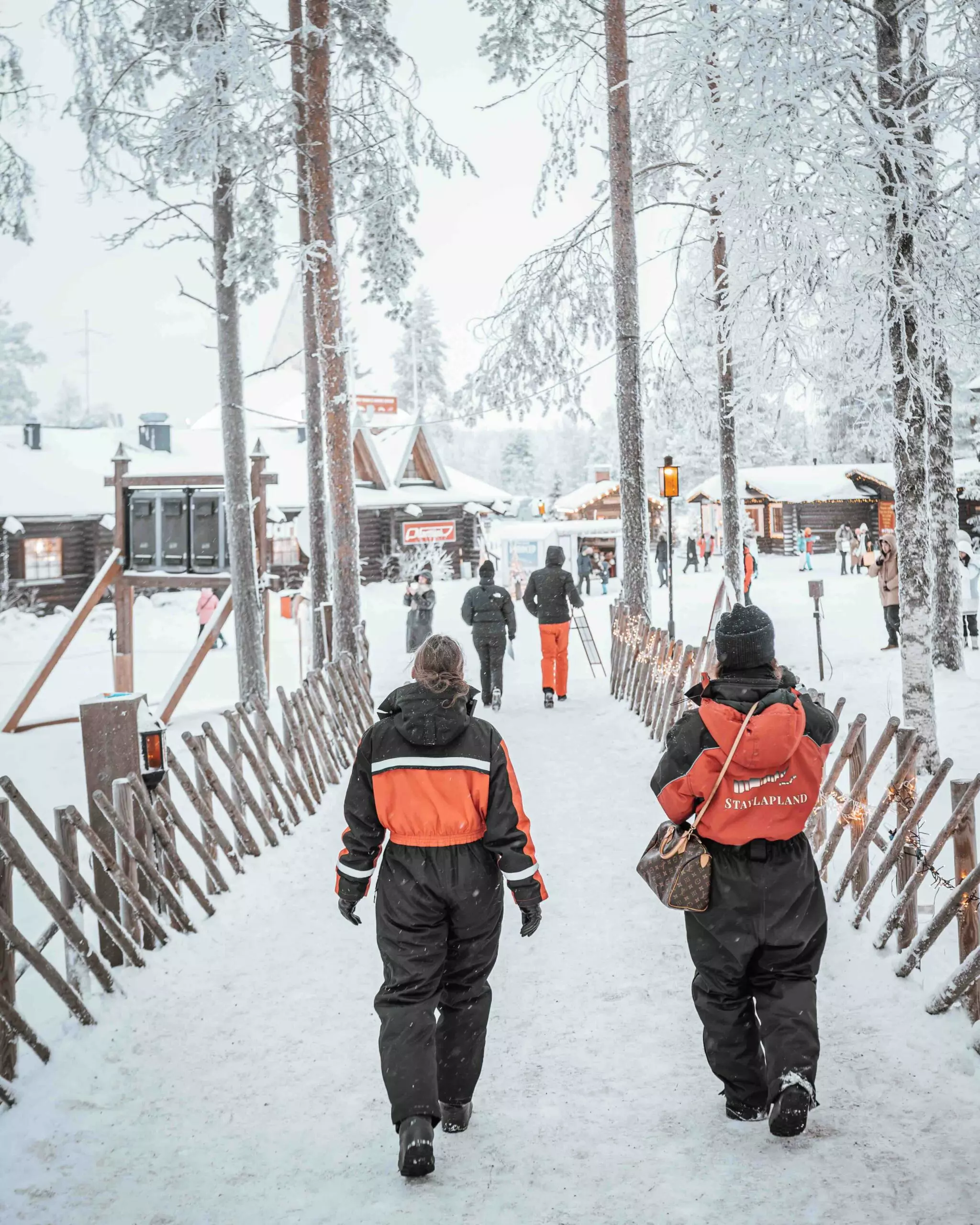
Because Rovaniemi is Santa’s official hometown, meeting Joulupukki is part of daily life for us in winter. Our guided Santa Claus Village Tour (5 hours, from 169 €) takes families through Santa Claus Village with a guide who tells the village’s story, includes meeting Santa Claus, a local lunch, winter clothing and pick-up within 10 km of the city centre.
If you prefer a quieter meeting, our Magical Private Santa Visit takes your family to Santa’s Secret Hide-out for a private conversation, and guests of Postmaster Hotel and Aurora Hill Resort can book the Private Santa’s Surprise visit in their own room. All of them are on our Santa Claus activities page, and our article on meeting Santa Claus in Rovaniemi brings them together. Winter here also means reindeer — read about our reindeer safari.
A few Finnish words for your visit
- Joulupukki — Santa Claus (“Christmas goat”)
- Joulumuori — Mother Christmas
- Tonttu — elf (plural tontut)
- Hyvää joulua! — Merry Christmas!
- Onko täällä kilttejä lapsia? — Are there any well-behaved children here?
Frequently asked questions
What does Joulupukki mean in English?
It literally means ‘Christmas goat’. Joulu is Christmas and pukki is a billy goat; the name comes from old Finnish folk traditions.
Where does Joulupukki live?
Finnish tradition says he lives on Korvatunturi (‘Ear Fell’) in Lapland. He meets visitors every day of the year at Santa Claus Village on the Arctic Circle in Rovaniemi.
Who made Korvatunturi famous as Santa’s home?
According to Yle, radio host Markus Rautio announced on air in 1927 that Santa’s workshop was on Korvatunturi.
When does Joulupukki bring presents in Finland?
On Christmas Eve, 24 December, often in person — he knocks and asks whether there are any well-behaved children in the house.
What is the nuuttipukki?
A traditional goat figure in furs and horns linked to St Knut’s Day, 13 January, which went door to door asking for food and gifts. It is one of the roots of Joulupukki.
Can we meet Joulupukki with StayLapland?
Yes. Our Santa Claus Village Tour includes meeting Santa Claus, and we also offer a private visit to Santa’s Secret Hide-out and in-room visits for Postmaster Hotel and Aurora Hill Resort guests.
Ready to book?
StayLapland · From 169 €
5 hours · Very easy · Cut off: 4 hours before start time
#bokun_19522f63_21fe_f3b6_5b5a_005c304e93a6 { display: inline-block; padding: 10px 20px; background: #408C3D; border-radius: 5px; box-shadow: none; font-weight: 600; font-size: 16px; text-decoration: none; text-align: center; color: #FFFFFF; border:none; cursor: pointer; transition: background .2s ease; } #bokun_19522f63_21fe_f3b6_5b5a_005c304e93a6:hover{ background: #285726; } #bokun_19522f63_21fe_f3b6_5b5a_005c304e93a6:active{ background: #30682e; } #bokun_f023bd67_939f_c4a3_3dca_69d3232b9f99 { display: inline-block; padding: 10px 20px; background: #408C3D; border-radius: 5px; box-shadow: none; font-weight: 600; font-size: 16px; text-decoration: none; text-align: center; color: #FFFFFF; border:none; cursor: pointer; transition: background .2s ease; } #bokun_f023bd67_939f_c4a3_3dca_69d3232b9f99:hover{ background: #285726; } #bokun_f023bd67_939f_c4a3_3dca_69d3232b9f99:active{ background: #30682e; }Book Early the Activities for Winter 2026–2027 – Save 10% with code EARLY27 01.11.2026–31.03.2027 (Excludes husky & reindeer tours)
Questions before you book? Email booking@staylapland.com or WhatsApp +358 40 128 7846.
You may also like
- Magical Private Santa Visit — from 249 €, 1,5 hours
- Private Santa’s Surprise visit — from 199 €, 15 minutes
Sources
- thisisFINLAND — Yes, Santa Claus is from Finland: ten top facts about Father Christmas
- Yle — Finnish Christmas traditions explained
- Visit Finland — Meet Santa Claus in Finnish Lapland
- Visit Rovaniemi — Santa Claus and the magic of Christmas