
Anyone who has stood out on a clear night in Lapland knows the moment. For an hour there is a pale, quiet arc low in the north. Then, within minutes, it brightens, starts to ripple, and suddenly the whole sky is moving. Our guests often ask us what just happened. The answer has a name: an aurora substorm.
Below we explain what a substorm is, using the explanations published by NASA, NOAA’s Space Weather Prediction Center and the Finnish Meteorological Institute, and then how it shapes the way our guides plan a night out under the sky from Rovaniemi.
In short: an aurora substorm is a sudden release of energy that the solar wind has stored in Earth’s magnetosphere. The release sends showers of fast electrons down along the magnetic field lines into the upper atmosphere, and on the ground you see the aurora abruptly brighten, spread and move quickly, sometimes filling the whole sky. NASA’s THEMIS mission showed that magnetic reconnection is a primary driver of substorms.
At a glance
- From: 199 €
- Experience type: Northern Lights tour
- Duration: Total duration of tour is usually 4-10 hours depends on conditions of the day
- Difficulty: Easy
- Book in Advance: Cut off: 1 hours before start time
- Included: Small group 2-8 persons; Professional Northern Lights guide & photographer in English (other languages available on request: (Spanish, Portuguese, French, Italian, German & Finnish. PLEASE NOTE LIMITED AVAILABILITY FOR OTHER LANGUAGES) If another language is required. Please send us an email or WhatsApp after booking.); Winter clothing (Adult & Child size), overalls, boots, gloves, socks; Information about the Northern Lights; Pick-ups and drop-offs are included in the price in 10 km radius from Rovaniemi city center; Professional DSLR photos (delivered securely online); Air conditioned car; Northern Lights guarantee, if we don’t capture Northern Lights you get 100% your money back!; Hot drinks & light snacks; Unlimited mileage & time (typically 4–10 hours)
- Cancellation: Free cancellation 24 hours before the activity. We will charge a cancellation fee of 100% if booking is cancelled less than 24 hours before the activity.
- Accessibility: Not wheelchair accessible; Not stroller accessible
StayLapland · From 199 €
Professional Small Group Northern Lights Hunting Tour from Rovaniemi – Guaranteed
Total duration of tour is usually 4-10 hours depends on conditions of the day · Easy · Cut off: 1 hours before start time
#bokun_70c4b778_996f_d146_5e3e_a457e7afa1de { display: inline-block; padding: 10px 20px; background: #408C3D; border-radius: 5px; box-shadow: none; font-weight: 600; font-size: 16px; text-decoration: none; text-align: center; color: #FFFFFF; border:none; cursor: pointer; transition: background .2s ease; } #bokun_70c4b778_996f_d146_5e3e_a457e7afa1de:hover{ background: #285726; } #bokun_70c4b778_996f_d146_5e3e_a457e7afa1de:active{ background: #30682e; }Book Early the Activities for Winter 2026–2027 – Save 10% with code EARLY27 01.11.2026–31.03.2027 (Excludes husky & reindeer tours)
What an aurora substorm looks like from the ground
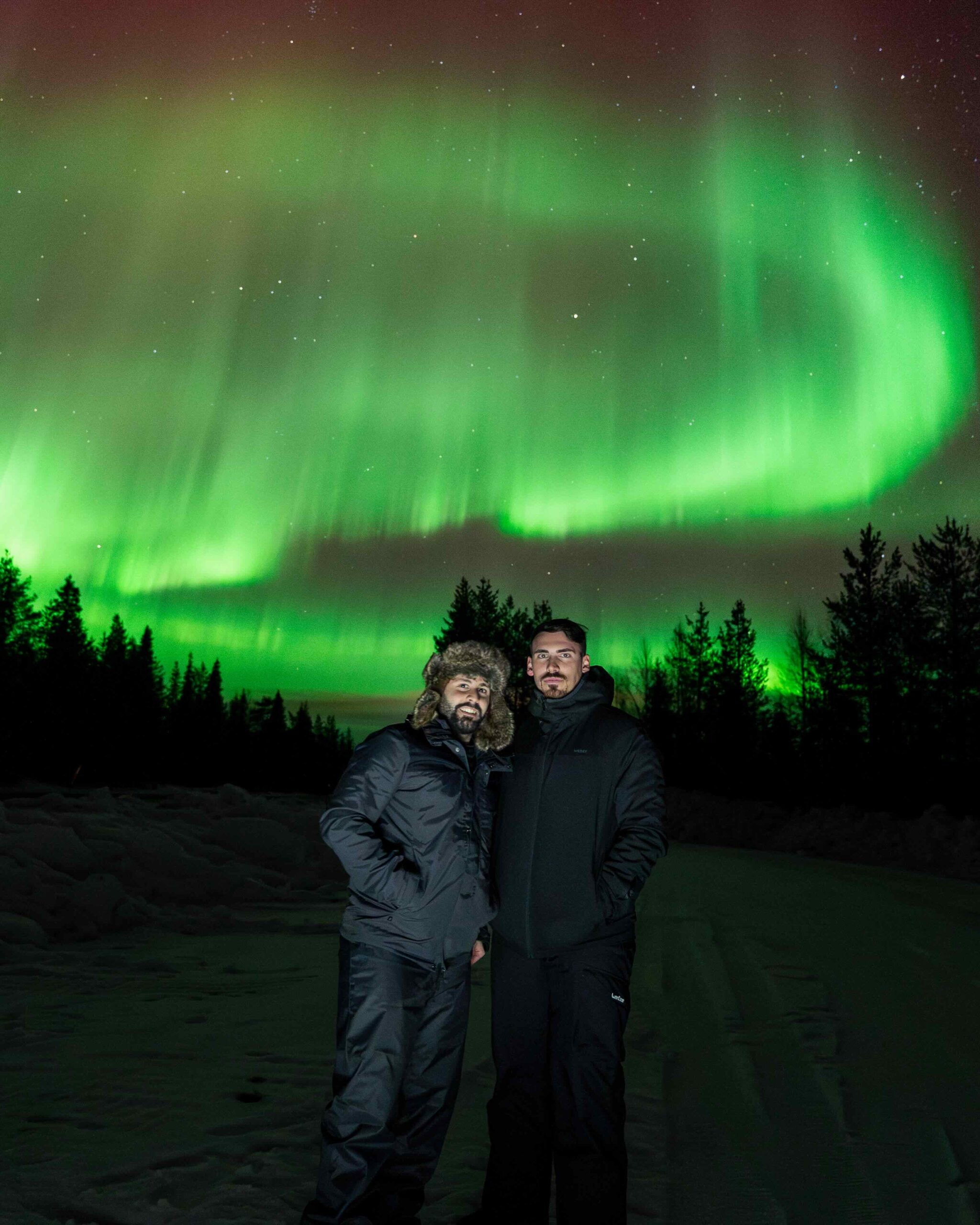
NOAA’s Space Weather Prediction Center describes a typical night well. The aurora often starts as arcs stretching from horizon to horizon. Late in the evening, near midnight, the arcs often begin to twist and sway, “just as if a wind were blowing on the curtains of light”. At the peak of activity, during an auroral substorm, the arcs may expand to fill the whole sky, moving rapidly and becoming very bright.
After the peak the display usually changes character. NOAA notes that the aurora can take on a more cloud-like appearance, with diffuse patches that often blink on and off repeatedly for hours. So if you have seen the sky explode and then turn into soft, pulsing patches, you have watched a substorm and what follows it.
Where the energy comes from: the solar wind and the magnetosphere
The aurora itself is light produced when electrons collide with the upper reaches of Earth’s atmosphere. NOAA explains that the electrons are accelerated in Earth’s magnetosphere and guided down by the magnetic field, where they hit oxygen and nitrogen and make them glow, much like the gas in a neon sign. This happens roughly 80 to 500 km above Earth’s surface.
A substorm is about timing. NASA describes substorms as invisible energy releases in which solar wind energy stored within Earth’s magnetosphere is explosively released, accelerating electrons into the upper atmosphere. The sudden brightening of the Northern Lights is what that release looks like from below. For the basics of how the aurora forms at all, see our article How are auroras formed?
Magnetic reconnection: the trigger
What flips the switch? NASA’s visualisation of a magnetospheric substorm shows the sequence: Earth’s magnetic field lines are stretched and changed by the solar wind, the field lines reconnect, energy is rapidly released along the field lines, plasma is sent towards Earth and the auroras brighten.
That process, magnetic reconnection, is the key. According to NASA, the THEMIS mission was able to show that magnetic reconnection is a primary driver of substorms. NASA has also described how fast it spreads: a substorm starts from a single point in space and progresses past the Moon’s orbit within minutes, which is why a single satellite could not find where it began.
StayLapland · From 99 €
Northern Lights Tour At The Campfire
3 hours · Very easy · Cut off: 3 hours before start time
#bokun_29351df9_d4d1_f9ef_0022_3b2b29a399cd { display: inline-block; padding: 10px 20px; background: #408C3D; border-radius: 5px; box-shadow: none; font-weight: 600; font-size: 16px; text-decoration: none; text-align: center; color: #FFFFFF; border:none; cursor: pointer; transition: background .2s ease; } #bokun_29351df9_d4d1_f9ef_0022_3b2b29a399cd:hover{ background: #285726; } #bokun_29351df9_d4d1_f9ef_0022_3b2b29a399cd:active{ background: #30682e; }Book Early the Activities for Winter 2026–2027 – Save 10% with code EARLY27 01.11.2026–31.03.2027 (Excludes husky & reindeer tours)
How NASA’s THEMIS mission studied substorms
THEMIS, launched in 2007, was designed specifically to understand when, where and why substorms happen. NASA used five identical probes, at the time the largest number of scientific satellites it had launched into orbit on a single rocket, so that the spacecraft could measure the same event at different points in space.
On the ground, 20 stations in Alaska and Canada with automated all-sky cameras and magnetometers documented the auroras and the electric currents in space at the same time. Combining the two views let scientists link what the probes measured far out in the magnetosphere with what people saw in the sky.
Auroral beads: a warning sign before the burst
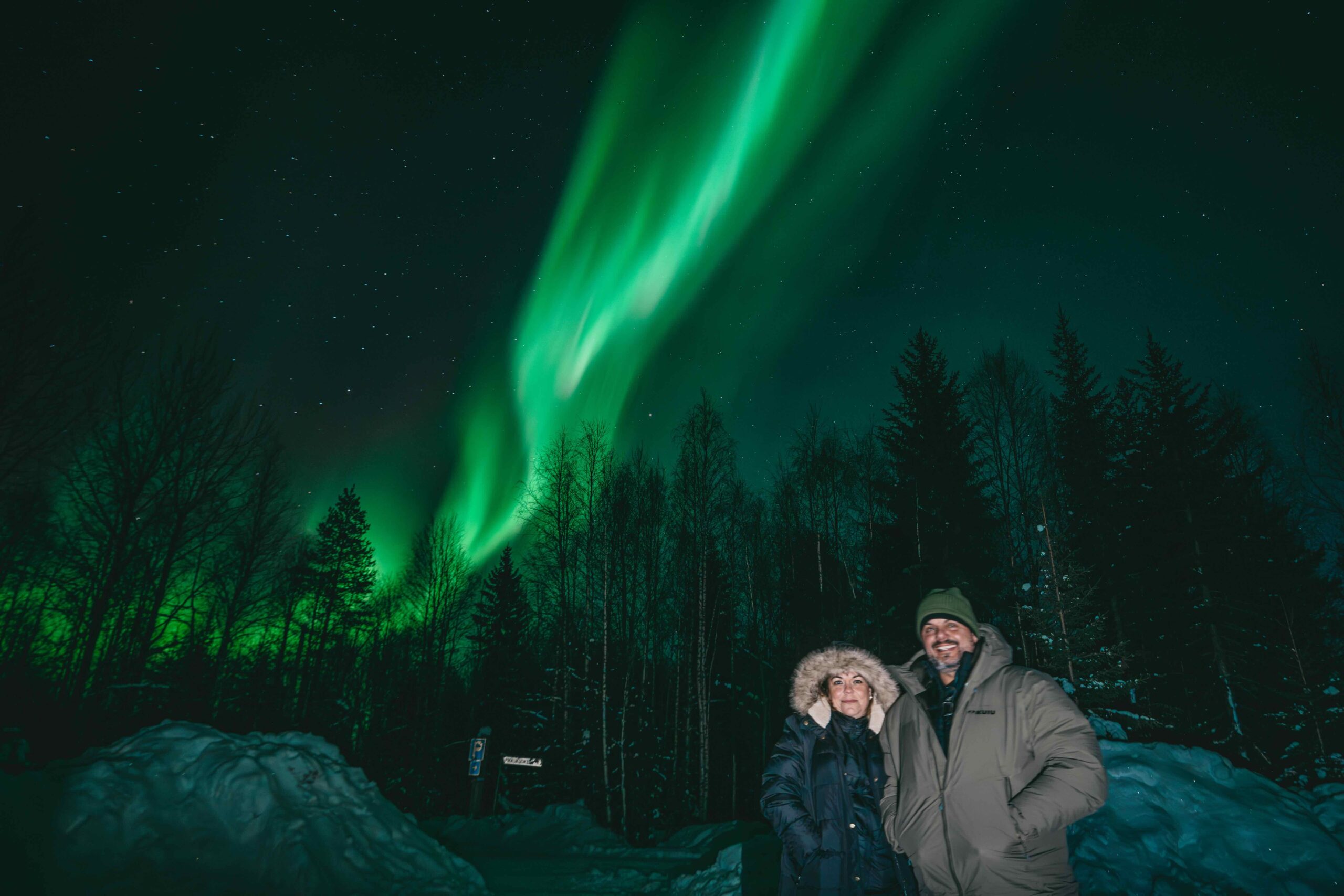
One finding that fascinates our guides is the “auroral beads”. NASA describes them as structures draped east–west across the night sky like a glowing pearl necklace, formed by turbulence in the plasma. Their formation is part of a process that precedes the triggering of a substorm in space: the plasma “fingers” behind them may tangle magnetic field lines and set off the explosive magnetic reconnection that creates full-scale substorms.
In practice this means a quiet, beaded arc is not a reason to go home. It can be exactly the stage before the sky opens up.
Substorms in Lapland: when and how often
Rovaniemi sits close to the Arctic Circle, below the auroral oval that NOAA describes as a region roughly between 60 and 75 degrees of latitude. The Finnish Meteorological Institute (FMI) notes that in northern Lapland the Northern Lights are seen on three nights out of four when the sky is clear enough, and in Sodankylä roughly every second night.
FMI gives the best time to see auroras as between 9 p.m. and 1 a.m. local time, and the best months as September–October and February–March, with the light summer nights ruling viewing out. FMI also explains that when monitoring instruments on the ground or on satellites detect a deviation from normal conditions, a space weather storm can be expected within hours. That is why aurora watching is a matter of forecasts and patience, never a timetable. We explain the seasonal part in more detail in Equinox aurora: the science behind active September and March skies.
How this shows up on our tours
Substorms are the reason our aurora hunting is built the way it is. On the Professional Small Group Northern Lights Hunting Tour from Rovaniemi – Guaranteed (from 199 €), our guides study cloud forecasts, weather conditions and aurora activity every evening before choosing the direction for the night. The group is small, 2–8 persons, the route can change every night, and the tour usually lasts 4–10 hours depending on the conditions, so we can stay out when a quiet arc looks like it might break up. The start time varies between 17:00 and 21:00 and is confirmed by email by 14:00.
Your guide is also a photographer, and professional DSLR photos are included, delivered online within 2–3 business days. Two honest notes from our own product page: the Northern Lights appear stronger on camera than to the naked eye, and aurora hunting involves a lot of driving and waiting, so patience is required. If we don’t capture the Northern Lights, you get 100 % of your money back.
If you prefer a shorter, fixed evening, the Northern Lights Tour At The Campfire (from 99 €, 3 hours) and the Northern Lights Tour in Atmospheric Cottage (from 109 €, 3 hours) wait at one spot in the forest, and the Professional Guaranteed Northern Lights Hunting Tour from Rovaniemi by Bus (from 109 €, usually 4–5 hours) hunts in a larger group. All of them are on our Northern Lights tours page.
Frequently asked questions
What is an aurora substorm?
A sudden release of energy stored in Earth’s magnetosphere by the solar wind. It accelerates electrons into the upper atmosphere, and the aurora abruptly brightens, spreads and moves quickly across the sky.
How long does a substorm take to develop?
NASA describes a substorm starting from a single point in space and progressing past the Moon’s orbit within minutes. On the ground the change from a quiet arc to a bright, moving sky can happen very fast.
What causes a substorm?
Magnetic reconnection. NASA’s THEMIS mission showed that magnetic reconnection is a primary driver of substorms.
When is the best time to see the aurora in Lapland?
The Finnish Meteorological Institute gives 9 p.m. to 1 a.m. local time as the best time, and September–October and February–March as the best months.
Can your guides predict a substorm?
No one can promise one. Our guides read cloud forecasts, weather conditions and aurora activity each evening and choose the direction for the night, and on the small-group hunt we can stay out for up to about 10 hours when conditions look promising.
What if we see no Northern Lights on the guaranteed tour?
On the Professional Small Group Northern Lights Hunting Tour you get a 100 % refund if we don’t capture the Northern Lights.
Ready to book?
StayLapland · From 199 €
Professional Small Group Northern Lights Hunting Tour from Rovaniemi – Guaranteed
Total duration of tour is usually 4-10 hours depends on conditions of the day · Easy · Cut off: 1 hours before start time
#bokun_f4bba5ef_24e5_4006_fce6_fd396cdd66ec { display: inline-block; padding: 10px 20px; background: #408C3D; border-radius: 5px; box-shadow: none; font-weight: 600; font-size: 16px; text-decoration: none; text-align: center; color: #FFFFFF; border:none; cursor: pointer; transition: background .2s ease; } #bokun_f4bba5ef_24e5_4006_fce6_fd396cdd66ec:hover{ background: #285726; } #bokun_f4bba5ef_24e5_4006_fce6_fd396cdd66ec:active{ background: #30682e; } #bokun_f94f5106_83d9_afb3_fee7_41c858a5504f { display: inline-block; padding: 10px 20px; background: #408C3D; border-radius: 5px; box-shadow: none; font-weight: 600; font-size: 16px; text-decoration: none; text-align: center; color: #FFFFFF; border:none; cursor: pointer; transition: background .2s ease; } #bokun_f94f5106_83d9_afb3_fee7_41c858a5504f:hover{ background: #285726; } #bokun_f94f5106_83d9_afb3_fee7_41c858a5504f:active{ background: #30682e; }Book Early the Activities for Winter 2026–2027 – Save 10% with code EARLY27 01.11.2026–31.03.2027 (Excludes husky & reindeer tours)
Questions before you book? Email booking@staylapland.com or WhatsApp +358 40 128 7846.
You may also like
- Northern Lights Tour At The Campfire — from 99 €, 3 hours
- Northern Lights Tour in Atmospheric Cottage — from 109 €, 3 hours
- Professional Guaranteed Northern Lights Hunting Tour from Rovaniemi by Bus — from 109 €, Total duration of tour is usually 4-5 hours depends on conditions of the day
Sources
- NASA – THEMIS mission to provide new understanding of substorm life cycle
- NASA – Aurora mysteries unlocked with NASA’s THEMIS mission
- NASA Scientific Visualization Studio – Substorms
- NOAA Space Weather Prediction Center – Aurora
- Finnish Meteorological Institute – Northern lights