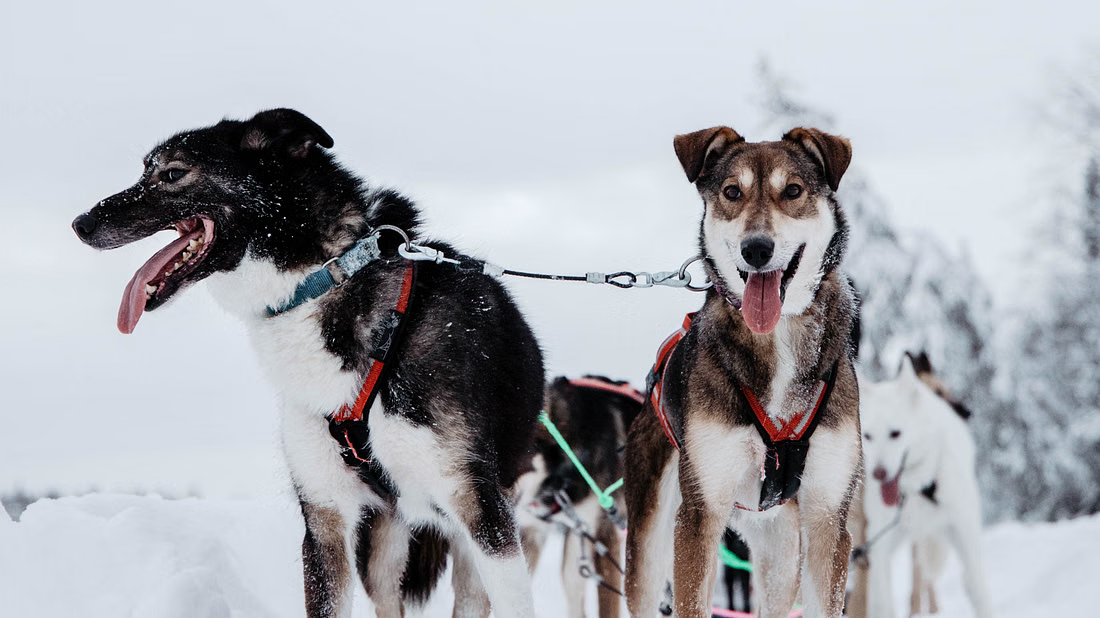
When guests see our huskies pulling a wheeled cart through a yellow autumn forest, the first question is usually: why, when there is no snow? The answer is simple. A sled dog team that is going to run all winter has to be running long before the first snowfall, and in Lapland the gap between summer and a proper snow cover is several weeks long. Carts fill that gap.
In this article we explain husky cart training in autumn the way our mushers talk about it: what it is for, why temperature matters so much, how the Lapland seasons shape the calendar, and where you can see it for yourself. Weather facts come from the Finnish Meteorological Institute; everything about our dogs and tours comes from our own pages.
In short: huskies train on carts in autumn because they need to be moving and in condition before the snow arrives, and a wheeled cart lets a musher run a team on forest tracks with no snow at all. It only happens when it is cool enough – on our autumn tour the limit is 10 °C or colder – because huskies overheat easily when they pull. When the snow is deep enough, the same teams switch to sleds.
At a glance
- From: 133 €
- Experience type: Early winter Husky tour
- Duration: 2 hours
- Difficulty: Very easy
- Book in Advance: Cut off: 4 hours before start time
- Included: Guided husky ride of 5 km (on carts only 3Km); Modern husky kennel visit; Transfers from/to Santa Claus Village, Hostel Cafe Koti in the city center, Arctic SnowHotel or with own transfer at the K-Market Sinettä.; Hot juice and cookies; Informative talk about huskies.
- Cancellation: We will charge a cancellation fee of 100% if booking is cancelled 7 days or less before the event. We will charge a cancellation fee of 10% if booking is cancelled 365 days or less before the event.
- Accessibility: Not wheelchair accessible; Not stroller accessible
StayLapland · From 133 €
Running with the Pack, 3km Husky Tour & Kennel Visit AVAILABLE 8.10–14.11
2 hours · Very easy · Cut off: 4 hours before start time
What husky cart training is
A training cart is essentially a sled on wheels: the dogs are harnessed in front of it exactly as they would be in front of a sled, and a musher rides on it to steer and brake. The dogs pull; the musher manages speed, distance and rest. Because the cart runs on gravel and forest tracks, it lets a kennel keep its teams running in the snowless part of the year.
On our summer kennel tour, The Life of the Husky, the product page describes it this way: the dogs are excited to give you a short ride with a cart “to show how they prepare for winter”. On our autumn tour, the cart ride you join is 3 km.
Why sled dogs need to be running before the snow
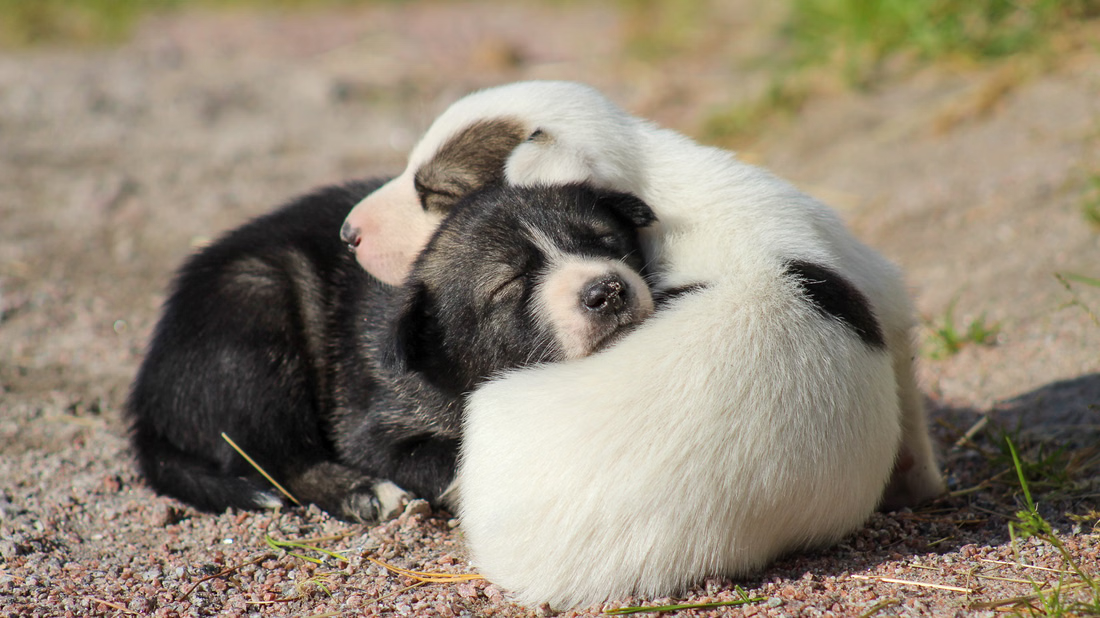
Our mushers at the Kuoksa Husky Park describe dog mushing as “a committed, year round, lifestyle”, with daily interaction with and care for the dogs at its core. A sled dog does not switch on when the snow comes – running is what these dogs love, and keeping them active through the year is part of looking after them.
How exactly each kennel trains is its own business. As our mushers put it in their story, “there are as many different ways of raising, training and feeding sled dogs as there are kennels”. So we will not pretend there is one universal training plan with fixed distances and dates. What every kennel shares is the goal: a team that is well trained, well cared for and confident when the winter season starts.
If you want to hear it first-hand, read the story of the people behind the Kuoksa Husky Park – Bent, who has worked with sled dogs for many years, and Delia, a veterinary technician who keeps up with veterinary seminars specifically about sled dogs.
Why temperature matters so much
Huskies are built for the cold. Pulling is hard work, and on a warm day a running dog can get too hot very quickly. That is why our husky rides outside the snow season have a temperature limit written into the product page:
- On the autumn Running with the Pack tour, the ride runs only at 10 °C or colder – “otherwise it’s too hot for the huskies to pull”.
- On the summer kennel tour, the short 800 m cart ride is included only at 15 °C or colder, for the same animal welfare reason.
In practice this means the weather, not the booking calendar, has the final word. On a mild day the dogs stay at the kennel, and that is exactly how it should be.
StayLapland · From 164 €
Running with the Pack, 5km Husky Tour & Kennel Visit AVAILABLE 16.11–22.11
2 hours 15 minutes · Easy · 2 hours
How the Lapland autumn sets the calendar
The Finnish Meteorological Institute defines the seasons by temperature. Thermal autumn begins when the daily mean temperature stays below 10 °C, and according to the institute it begins around the last week of August in northern Finland. Thermal winter starts when the mean temperature stays below 0 °C, which usually happens in mid-October in Lapland and during November in the rest of Finland.
Snow follows its own timetable. The institute notes that in Lapland the winter is long – approximately seven months – that the permanent snow cover comes significantly earlier than in southern Finland, and that the ground is typically covered with snow for over half a year. But the date it arrives varies from year to year, and a team cannot switch to sleds until the snow is deep enough to run on safely.
So autumn in Lapland gives a useful window: cool enough days for dogs to run on carts, weeks before sleds become possible. That is the window our autumn husky tour is built around.
From carts to sleds
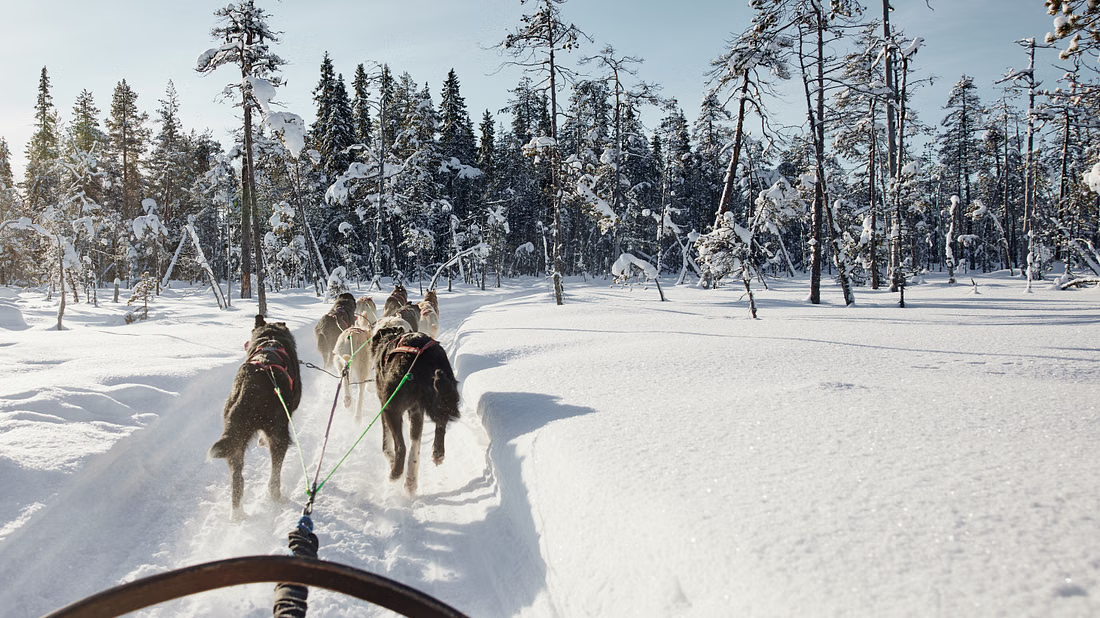
The switch is not a date on a calendar; it is a condition on the ground. Our tour pages say it plainly: we can only switch to sleds once there is sufficient snow cover, and during the early winter period the experience may still take place on carts.
You can see this in how our tours are described. The autumn ride is 3 km on a cart. The 5 km husky tour, which follows in November, becomes a 5 km sled ride once the snow allows – and as long as the teams are still on carts, the ride stays at 3 km. Our mushers at the Kuoksa Husky Park then run the dog sledding tours from November until April.
How this shows up on our tours
If you are in Rovaniemi in autumn, the easiest way to see husky cart training for yourself is our Running with the Pack, 3km Husky Tour & Kennel Visit. You sit in the cart while a musher drives the team for 3 km through the forest, visit a modern husky kennel, hear how the dogs live and train, and warm up with hot juice and cookies. It lasts 2 hours, is rated very easy, costs from 133 € and includes transfers from our pick-up points.
For the full step-by-step picture – pick-up points, what to wear and the small print – read our article on the husky cart tour in Rovaniemi. For the whole year of husky experiences, see our husky tours guide and our husky activities.
What to expect as a guest
A few honest notes from our tour page, so the reality matches the picture:
- You are a passenger – the musher drives. The tour is suitable even for very small children.
- We do not provide clothing on this tour. Autumn weather varies a lot, so dress in wool or synthetic layers, avoid cotton and wear clothes that can get muddy.
- The tour is not wheelchair or stroller accessible, and single travellers share the cart with other guests.
- The ride goes ahead only at 10 °C or colder.
Frequently asked questions
Why do huskies pull carts instead of sleds in autumn?
Because there is not yet enough snow for sleds. A wheeled cart lets a musher run the team on forest tracks so the dogs keep moving and are ready for the winter season.
Is cart training hard on the dogs?
We only run the dogs when it is cool enough. On our autumn tour the ride goes ahead only at 10 °C or colder, because otherwise it is too hot for the huskies to pull.
When do the huskies switch to sleds?
Only once there is sufficient snow cover. The date changes from year to year, and in early winter the rides may still take place on carts.
How long is the autumn cart ride on your tour?
3 km. When the teams switch to sleds, the ride on the same tour becomes 5 km. The whole tour lasts 2 hours.
When does winter begin in Lapland?
According to the Finnish Meteorological Institute, thermal winter – when the mean temperature stays below 0 °C – usually begins in mid-October in Lapland.
Can I drive the cart myself?
No. On our autumn tour you sit in the cart and a musher drives the team.
Ready to book?
StayLapland · From 133 €
Running with the Pack, 3km Husky Tour & Kennel Visit AVAILABLE 8.10–14.11
2 hours · Very easy · Cut off: 4 hours before start time
Questions before you book? Email booking@staylapland.com or WhatsApp us on +358 40 128 7846.
You may also like
- Running with the Pack, 5km Husky Tour & Kennel Visit AVAILABLE 16.11–22.11 — from 164 €, 2 hours 15 minutes
Sources
- Finnish Meteorological Institute – Seasons in Finland
- Finnish Meteorological Institute – Snow statistics