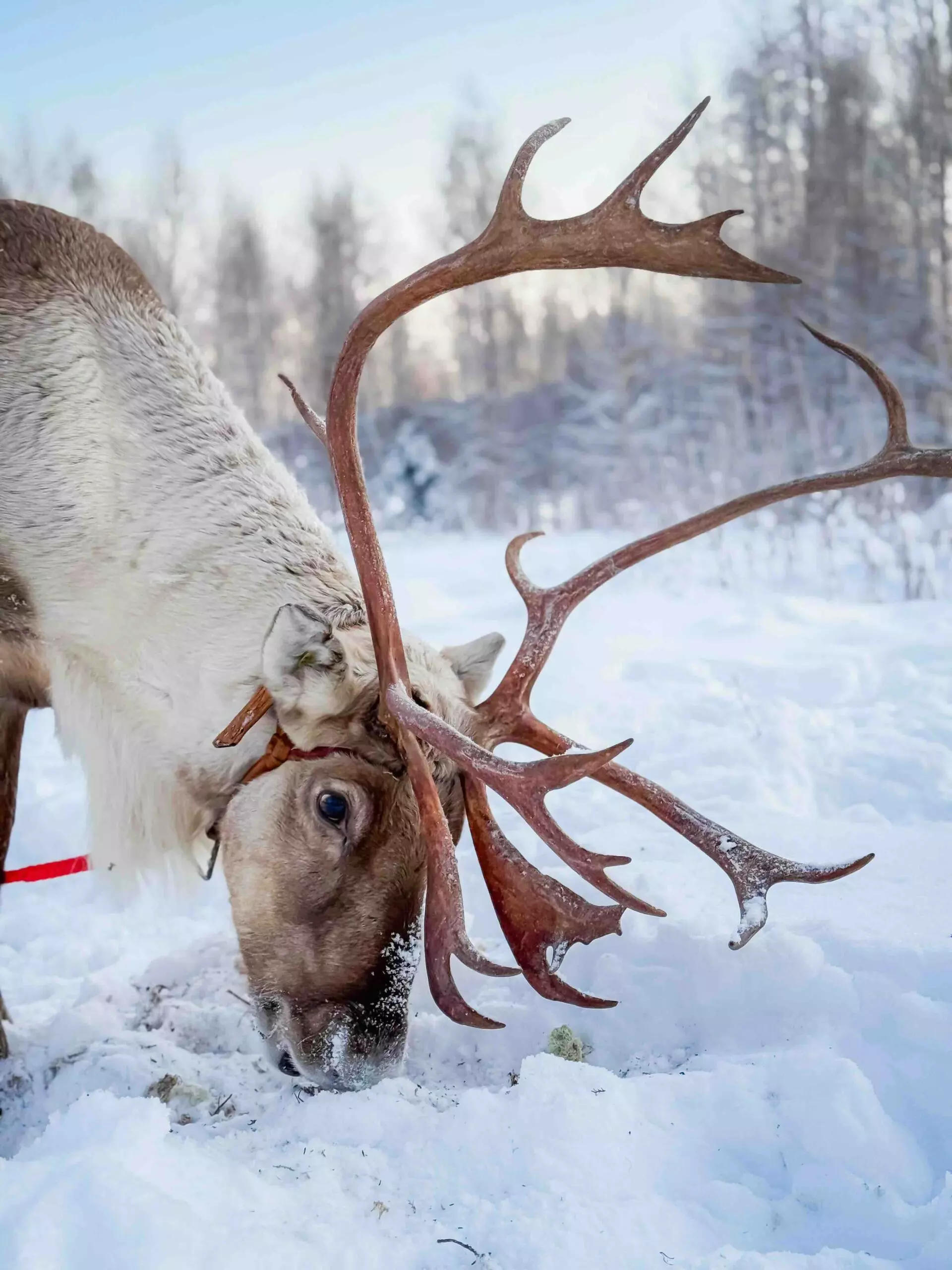
Guests on our reindeer tours often look out at a forest buried in snow and ask the obvious question: what do the reindeer actually eat all winter? The answer is that they dig for it — patiently, for months — and they find it mostly by smell.
We keep reindeer at Kuoksa Reindeer Stories, so this is something we see every winter. Below we explain how reindeer digging for lichen works, using our own reindeer information page and the Finnish Reindeer Herders’ Association (Paliskuntain yhdistys) for the facts and figures.
The short answer: reindeer smell lichen under the snow — according to the Reindeer Herders’ Association, through snow as thick as about 1 metre — and then dig it out with their hooves, making a feeding pit. They dig for food around seven months of the year, at least eight hours a day. When the snow freezes hard, digging gets difficult, and herders may step in with extra feed.
At a glance
- From: 159 €
- Experience type: Reindeer tour
- Duration: 3 hours
- Difficulty: Very easy
- Book in Advance: Cut off: 12 hours before start time
- Included: 2-3 km reindeer safari in the forest of Lapland; Information about the life of reindeer, reindeer farm and reindeer herding in general; A Tour Guide in English (other languages available on request: (Spanish, Portuguese, French, Italian, German & Finnish. PLEASE NOTE LIMITED AVAILABILITY FOR OTHER LANGUAGES) If another language is required. Please send us an email or WhatsApp after booking.); Winter clothing (Adult & Child size), overalls, boots, gloves, socks; Cookies and juice; Photos taken with your own device; Pick-ups are included in the price within a 10 km radius of Rovaniemi city centre; Between 1 December and 10 January, drop-offs are included only to selected locations: Postmaster Hotel, Rovaniemi City Centre, Ollerovaara area and Santa Claus Village; Air conditioned car
- Cancellation: Free cancellation 24 hours before the activity. We will charge a cancellation fee of 100% if booking is cancelled less than 24 hours before the activity.
- Accessibility: Not wheelchair accessible; Not stroller accessible
StayLapland · From 159 €
3 hours · Very easy · Cut off: 12 hours before start time
What reindeer eat in winter
Reindeer are not fussy eaters. As we explain on our reindeer information page, they eat over 400 different plants, and their favourites are mushrooms and lichen. In summer, the herds spend their time in the forest building up reserves for the long winter.
In winter the menu narrows. The Reindeer Herders’ Association lists lichen, twigs, hay and beard moss as winter foods. Ground lichen is the most popular, but reindeer can survive the winter without it if they have to. Beard lichens, which hang from old trees, are even better for them: they contain more protein than the lichens on the ground and are easier to digest.
Finding lichen by smell
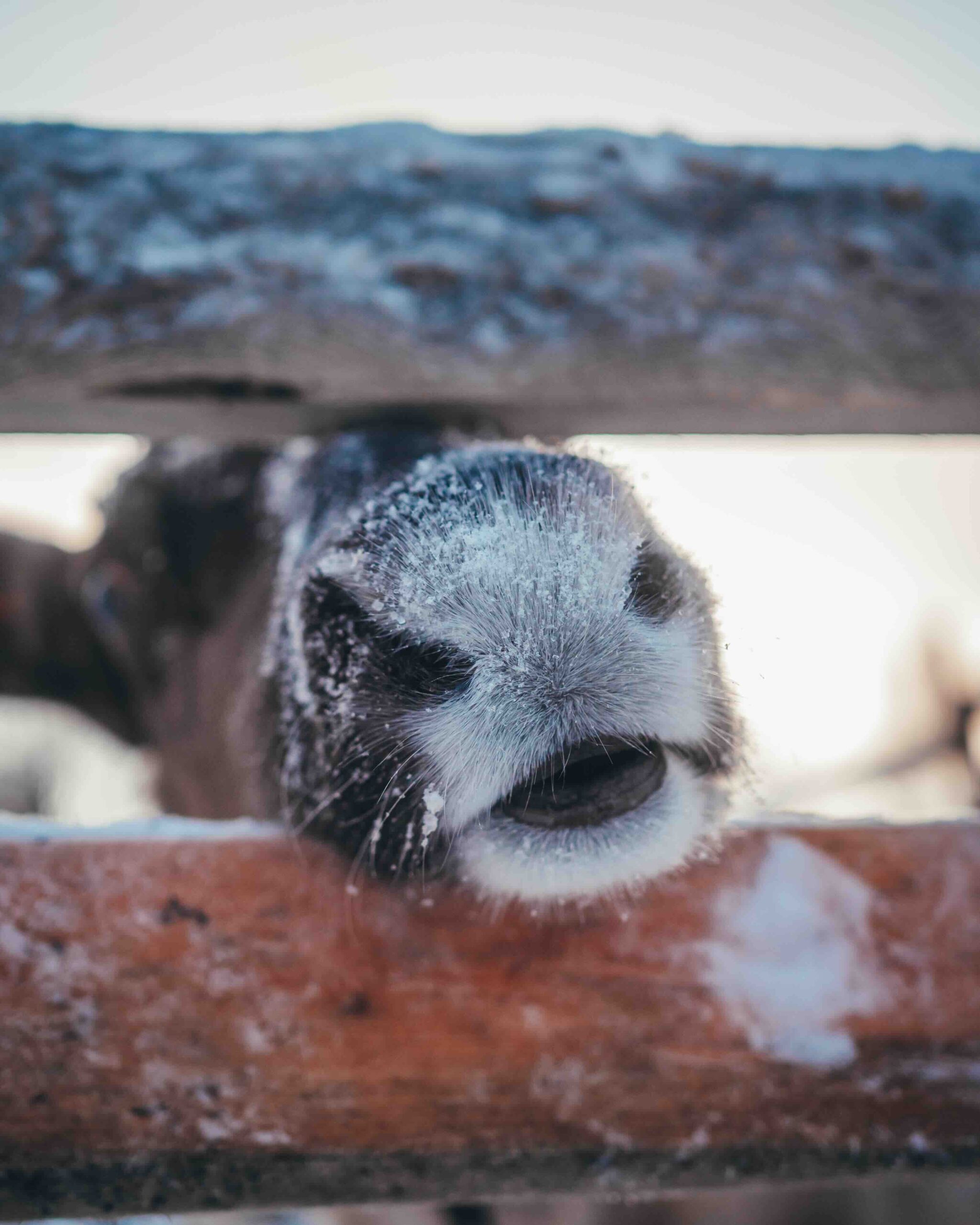
A reindeer does not dig at random. It uses its excellent sense of smell to locate lichen, and the Reindeer Herders’ Association notes that reindeer can smell lichen through snow about 1 metre thick. If there is no scent of food, the reindeer simply does not dig there.
That is a big saving of energy. Digging through deep snow is hard work, and a reindeer that dug blindly would burn more energy than the food gave back.
Four-toed hooves built for digging
Once a reindeer has found the scent, it goes to work with its hooves. Reindeer have unique four-toed hooves that are adapted to walking in thick snow and digging out food. With them, the reindeer pushes the snow aside until the lichen is exposed.
If you walk close to a herd, listen for a soft click from their legs as they move. The clicking comes from their joints, and it helps keep the herd together in the forest.
The feeding pit: how a reindeer digs
In Finnish the pit a reindeer digs is called a kiekerö. The reindeer first throws the snow away, then widens the hole rather than starting fresh, so that it does not have to keep moving the same snow again. When the snow is very deep, calves may dig themselves right into the snow and keep feeding inside it.
This is not a quick snack. The Reindeer Herders’ Association describes reindeer digging for food seven months of the year, for at least eight hours a day.

StayLapland · From 159 €
3,5 hours · Easy · Cut off: 8 hours before start time
When the snow turns hard
Deep, soft snow is manageable. The real problem is weather that swings back and forth. When a mild spell makes the snow wet and it then freezes again, the frozen layer is very difficult for reindeer to break through. Towards spring, digging gets harder still.
This is also why females keep their antlers through the winter. As our reindeer information page explains, antlers help the females protect their calves and find food under a thick layer of snow, while the males drop theirs after the autumn mating season.
Why a long winter still costs them weight
Lichen is full of easy carbohydrates, so it gives reindeer good energy. But it has only a little protein, minerals, trace elements and vitamins, and its protein is not well digested. According to the Reindeer Herders’ Association, reindeer therefore lose around 10–20% of the weight they gained in autumn over the winter, and in harsh winters as much as 40%.
Their bodies help them cope. In winter, a reindeer’s metabolism, heartbeat and breathing slow down, it moves around less, and its digestion adjusts to the winter food. The fat stored over the summer is what carries it through to spring.
When herders help with extra feed
Reindeer herding in Finland has changed with the forests. The Reindeer Herders’ Association explains that herders start feeding reindeer when digging for lichen becomes too difficult and the animals cannot get enough nutrition from nature. They feed mainly hay, lichen, leaves and horsetail.
One reason is the loss of old forest: beard lichen grows best in forests older than 80 years, and the association reports that the share of old forests fell from 71% in the early 1920s to 16% by the end of the 1990s. Our own reindeer at Kuoksa get a balanced diet and regular treats, and they work to a reindeer-specific shift calendar so they get the rest they need.
How this shows up on our tours
On the Kuoksa Reindeer Adventure (from 159 €, 3 hours including transfers) you ride a reindeer sleigh for 2–3 km through the Lapland forest, and the guide tells you about the life of reindeer, the reindeer farm and reindeer herding. That is the moment to ask about digging, antlers and winter feeding. Winter clothing, cookies and juice, and pick-up within 10 km of Rovaniemi city centre are included.
If you would rather combine reindeer with something else, Ice Fishing with Reindeer (from 159 €) takes you by reindeer sleigh to our ice fishing spot, and the Northern Lights Tour Reindeer Safari (from 179 €) is an evening sleigh ride with an eye on the sky. You can see all of them on our reindeer activities page, and read more about the experience in our post on the reindeer safari in Rovaniemi.
Frequently asked questions
How do reindeer find food under the snow?
Mostly by smell. Reindeer can smell lichen through about a metre of snow, and they only dig where they smell food.
What do reindeer eat in winter?
Lichen, twigs, hay and beard moss. Ground lichen is the favourite, but beard lichens have more protein and are easier to digest.
How long do reindeer spend digging?
According to the Reindeer Herders’ Association, reindeer dig for food seven months of the year, at least eight hours a day.
Why is icy snow a problem for reindeer?
When snow turns wet in a mild spell and then freezes, the hard layer is very difficult to dig through, and digging gets harder towards spring.
Do reindeer lose weight in winter?
Yes. They typically lose around 10–20% of the weight gained in autumn, and up to 40% in harsh winters.
Can I learn about reindeer on a StayLapland tour?
Yes. On the Kuoksa Reindeer Adventure the guide tells you about the life of reindeer, the reindeer farm and reindeer herding during a 2–3 km sleigh ride.
Ready to book?
StayLapland · From 159 €
3 hours · Very easy · Cut off: 12 hours before start time
Questions about our reindeer? Email booking@staylapland.com or WhatsApp us on +358 40 128 7846.
You may also like
- Ice Fishing with Reindeer — from 159 €, 3,5 hours
- Northern Lights Tour Reindeer Safari — from 179 €, 3,5 hours
Sources
- Reindeer Herders’ Association — Snow and digging: the winter of the reindeer
- Reindeer Herders’ Association — Adjusting to winter
- Reindeer Herders’ Association — Reindeer feeding
- Reindeer Herders’ Association — Winter in reindeer husbandry
- StayLapland — Reindeer information