Guests often notice him before they know who he is: a bearded figure on a red shield, wreathed in green leaves and carrying a club over his shoulder. He appears on signs, maps and souvenirs all over the north, and sooner or later someone on one of our tours asks, “Who is that man?”
He is the wild man of the Lapland coat of arms, and his story goes back more than four hundred years to a Swedish king’s ambitions in the far north. Below we explain the official description, how the arms came about, what historians think the figure represents, and the other symbols the region has chosen for itself – all based on what the Regional Council of Lapland publishes.
In short: the coat of arms of the region of Lapland shows, on a red field, a wild man facing the viewer, with a green oak-leaf wreath around his waist and forehead and a golden club in his right hand resting against his shoulder. A count’s crown with eleven pearls sits above the shield. The design dates back to King Charles IX of Sweden, who founded the County of Lapland and added its arms to the arms of his realm after taking the title of king in 1604.
At a glance
- From: 89 €
- Experience type: Snowshoeing / Nature tours
- Duration: 3,5 hours
- Difficulty: Easy
- Book in Advance: Cut off: 3 hours before start time
- Included: Snowshoes & Ski Poles; A Tour Guide in English (other languages available on request: Spanish, Portuguese, French, Italian, German & Finnish. PLEASE NOTE LIMITED AVAILABILITY FOR OTHER LANGUAGES) If another language is required. Please send us an email or WhatsApp after booking.; A traditional Teepee; Winter clothing (Adult & Child size), overalls, boots & gloves; Local Snacks & Drinks; Pick-ups and drop-offs are included in the price in 10 km radius from Rovaniemi city center; Information about Finnish nature; Photos taken with your own device; Air conditioned car
- Cancellation: Free cancellation 24 hours before the activity. We will charge a cancellation fee of 100% if booking is cancelled less than 24 hours before the activity.
- Accessibility: Not wheelchair accessible; Not stroller accessible; Not recommended for children under 7 years old
StayLapland · From 89 €
Snowshoeing Tour in the Private Kuoksa Wilderness
3,5 hours · Easy · Cut off: 3 hours before start time
Book Early the Activities for Winter 2026–2027 – Save 10% with code EARLY27 01.11.2026–31.03.2027 (Excludes husky & reindeer tours)
The official description of the coat of arms
The Regional Council of Lapland (Lapin liitto) gives the blazon – the formal heraldic description – of the regional coat of arms. Put into plain English, it says:
- Field: red.
- Figure: a wild man shown from the front.
- Wreath: a green oak-leaf wreath around his waist and his forehead.
- Club: a golden club held in his right hand, resting against his shoulder.
- Crown: above the arms, a count’s crown with eleven pearls.
The crown is a reminder that Lapland was once a county (kreivikunta) – a rank in the old Swedish realm, of which Finland was then a part.
A king’s northern ambitions
According to the Regional Council of Lapland, the wild man – in German, wilder Mann – remained in the regional and provincial arms of both Lapland in Finland and Norrbotten in Sweden as a memento of the northern policy of King Charles IX of Sweden and his attempts to conquer the coast of the Arctic Ocean.
Charles IX founded the County of Lapland, which became the ninth among Finland’s duchies and counties. Once he had taken the title of king in 1604, he joined the Lapland arms to the coats of arms of his realm. The arms appear on a showpiece coin of 1606, in the chain of coats of arms that surrounds the king’s seal.
Why a wild man – and not two wolves
The king gave the task of designing the arms of the County of Lapland to his German court architect. At the time, the wild man was highly fashionable in Germany: he appeared in town coats of arms, in the names of taverns and even in art.
The architect proposed the wild man as Lapland’s emblem. There was a competing proposal – two fighting yellow wolves on a blue or white background – but the wild man won.
It is worth pausing on this: the figure was chosen at a royal court far to the south, following a European fashion of the day. He tells us more about how a 17th-century king imagined the north than about the people who actually lived here, including the Sámi, whose homeland covers the northernmost part of Finnish Lapland.
StayLapland · From 139 €
Korouoma Frozen Waterfalls Hike
6 hours · Challenging · Cut off: 3 hours before start time
Book Early the Activities for Winter 2026–2027 – Save 10% with code EARLY27 01.11.2026–31.03.2027 (Excludes husky & reindeer tours)
Not just any wild man: the hero Starkad
Historian Leif Tengström examined the origins of the Lapland arms in depth in his doctoral dissertation (Jyväskylä, 1997). He argues that the figure is not an ordinary wild man at all, but the ancient hero Starkater (also known as Starkad or Starcaterus) – a mighty “superman” of old northern legend.
The wild man’s appearance has also changed over the centuries. At King Charles IX’s funeral, the Lapland arms on display were described as showing a “swart Willman” – a black wild man. As A. W. Rancken and Kauko Pirinen noted in 1949, this did not refer to skin colour: it should be understood that the man was imagined dressed in a black leather fur, as a son of the remote northern wilds would be.
How the coat of arms is used today
The coat of arms is still very much in use, and the Regional Council of Lapland sets the rules:
- The regional board grants permission to use the arms and supervises their use.
- Permission can be granted to joint municipal authorities, associations and communities that operate mainly in the region.
- No permission is needed for maps, tourism publications, reference works or teaching.
- The arms may only be shown as the blazon describes them – in their original colours, in black and white, or as a line drawing.
- Commercial use is possible, but permission can be withdrawn if the arms are used in a way that lowers their value.
That explains why you will spot the wild man on maps and in brochures around the region: tourism publications are one of the uses the rules allow without separate permission.
Lapland’s other regional symbols
The coat of arms is only one of the official regional symbols listed by the Regional Council of Lapland. The others tell you a lot about the landscape we work in every day:
- Regional bird – the bluethroat (Luscinia svecica): it thrives in northern Finland in summer, in birch forests, willows along fell streams and at the edges of wetlands, and winters in South Asia and Central Africa.
- Regional fish – the Atlantic salmon (Salmo salar): a migratory fish from the North Atlantic that returns to its home river to spawn.
- Regional flower – the globeflower (Trollius europaeus): it blooms abundantly from early summer to midsummer in meadows, on riverbanks and along fell streams.
- Regional stone – gold.
- Regional lake – Lake Inari, with 3,318 islands and an area of 1,084 km², Finland’s third-largest lake.
- Regional song – Kymmenen virran maa (“Land of ten rivers”), with music by Oskar Merikanto and lyrics by A. V. Forsman.
Many of these are summer symbols. If you are curious how the northern year really moves, our article on the eight seasons of Lapland follows it season by season.
How this shows up on our tours
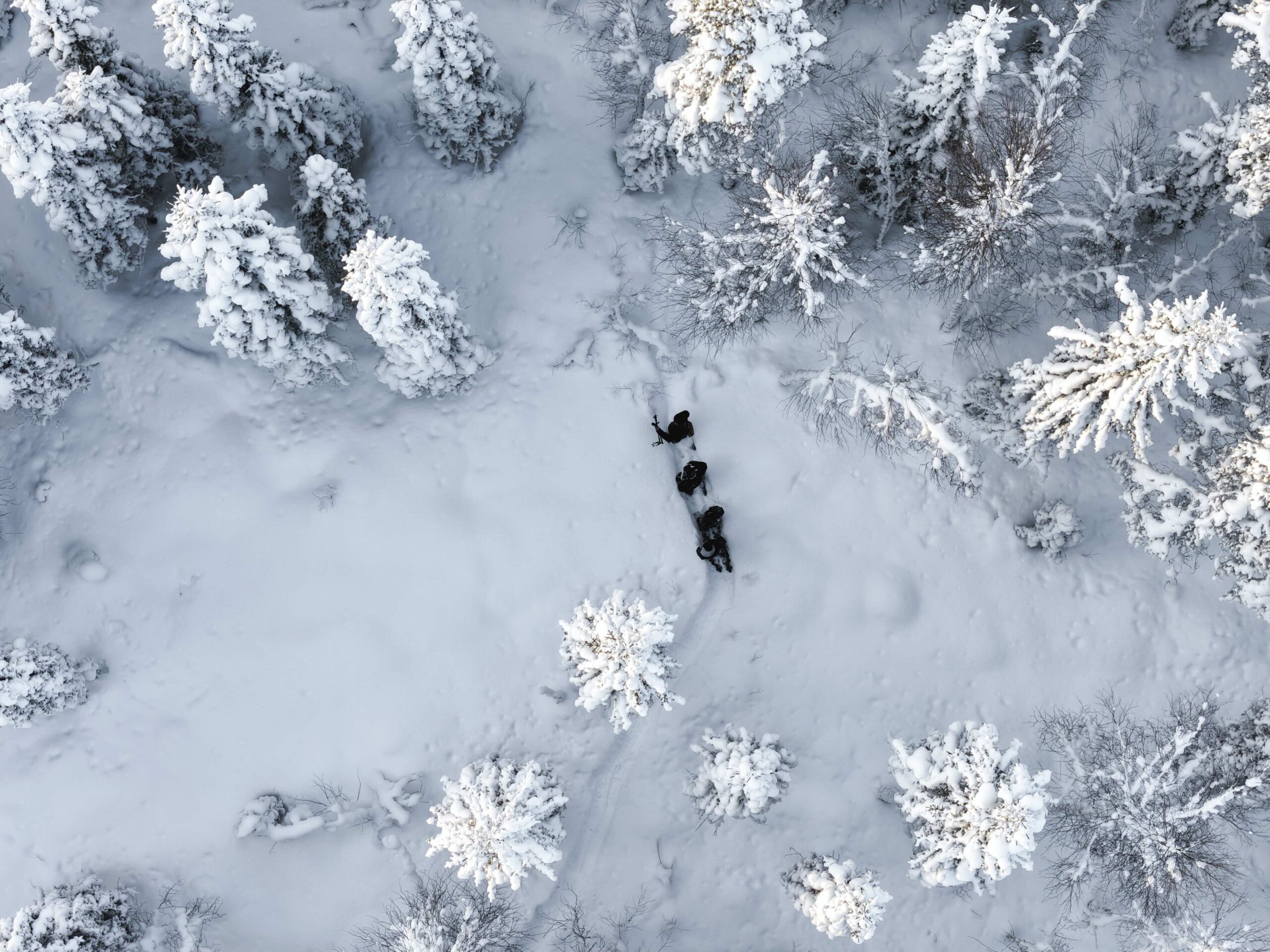
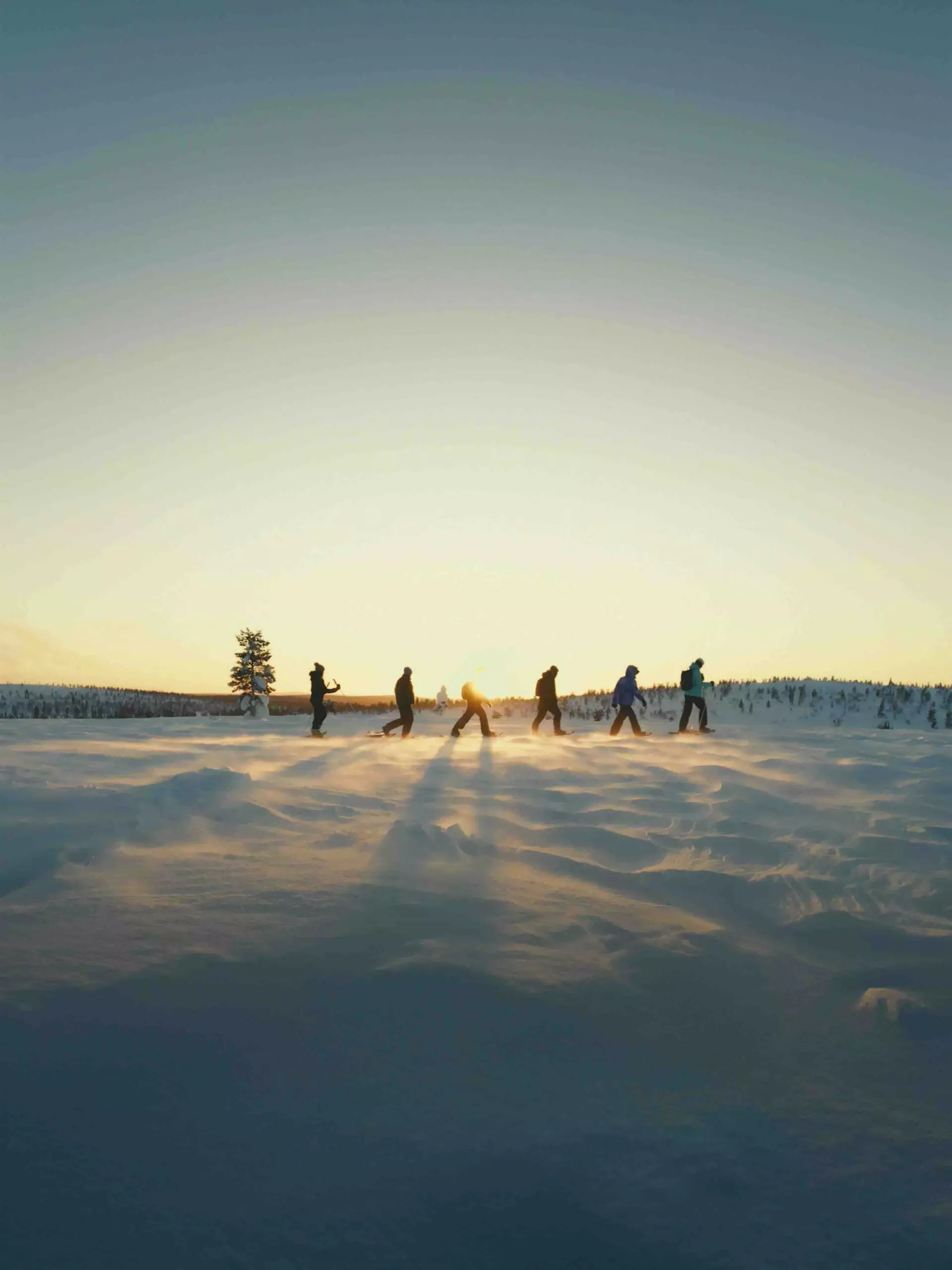
The old royal arms imagined Lapland as the land of the “son of the northern wilds”. Our own tours are a gentler way to meet those wilds. On the Snowshoeing Tour in the Private Kuoksa Wilderness we start at our Dressing Room in Rovaniemi, where we provide winter clothing, snowshoes and gear. Your group then drives about 40 minutes to our private area in the Kuoksa wilderness, where the snow hike through the forest begins.
Along the way your guide shares information about Finnish nature, and the tour ends Finn-Lappish style with a light barbecue over a campfire and hot berry juice, with a traditional teepee included. The tour takes about 3,5 hours, is rated easy, and is priced from 89 €. It is not recommended for children under 7 years old.
If the history of the north is what draws you, you may also enjoy our introduction to Sámi culture for visitors – the living culture of the people whose homeland the old royal arms never really described. All our tours are listed under activities in Rovaniemi.
Frequently asked questions
What is on the Lapland coat of arms?
A wild man shown from the front on a red field, with a green oak-leaf wreath around his waist and forehead and a golden club in his right hand resting against his shoulder. A count’s crown with eleven pearls sits above the shield.
Who created the Lapland coat of arms?
King Charles IX of Sweden gave the design task to his German court architect, who proposed the wild man. A rival design with two fighting yellow wolves was rejected.
Who is the wild man?
The figure follows the German ‘wilder Mann’ fashion of the time. Historian Leif Tengström has argued that he represents the ancient hero Starkater (Starkad).
Why does the coat of arms have a crown?
Lapland was founded as a county by Charles IX, and the arms carry a count’s crown with eleven pearls.
Does Swedish Norrbotten use the same figure?
Yes. According to the Regional Council of Lapland, the wild man remained in the arms of both Lapland and Norrbotten as a memento of Charles IX’s northern policy.
Can I use the coat of arms myself?
The Regional Council of Lapland grants permission and supervises use. Maps, tourism publications, reference works and teaching do not require permission, and the arms must always follow the official description.
Ready to book?
StayLapland · From 89 €
Snowshoeing Tour in the Private Kuoksa Wilderness
3,5 hours · Easy · Cut off: 3 hours before start time
Book Early the Activities for Winter 2026–2027 – Save 10% with code EARLY27 01.11.2026–31.03.2027 (Excludes husky & reindeer tours)
Questions before you book? Email booking@staylapland.com or WhatsApp us on +358 40 128 7846.
You may also like
- Korouoma Frozen Waterfalls Hike — from 139 €, 6 hours
- Ranua WildLife Zoo Park Visit — from 139 €, 5 hours
Sources
- Regional Council of Lapland (Lapin liitto) – Maakuntavaakuna
- Regional Council of Lapland (Lapin liitto) – Maakuntavaakunan käyttö
- Regional Council of Lapland (Lapin liitto) – Maakuntatunnukset
- Sámi Parliament of Finland – Sámi Homeland