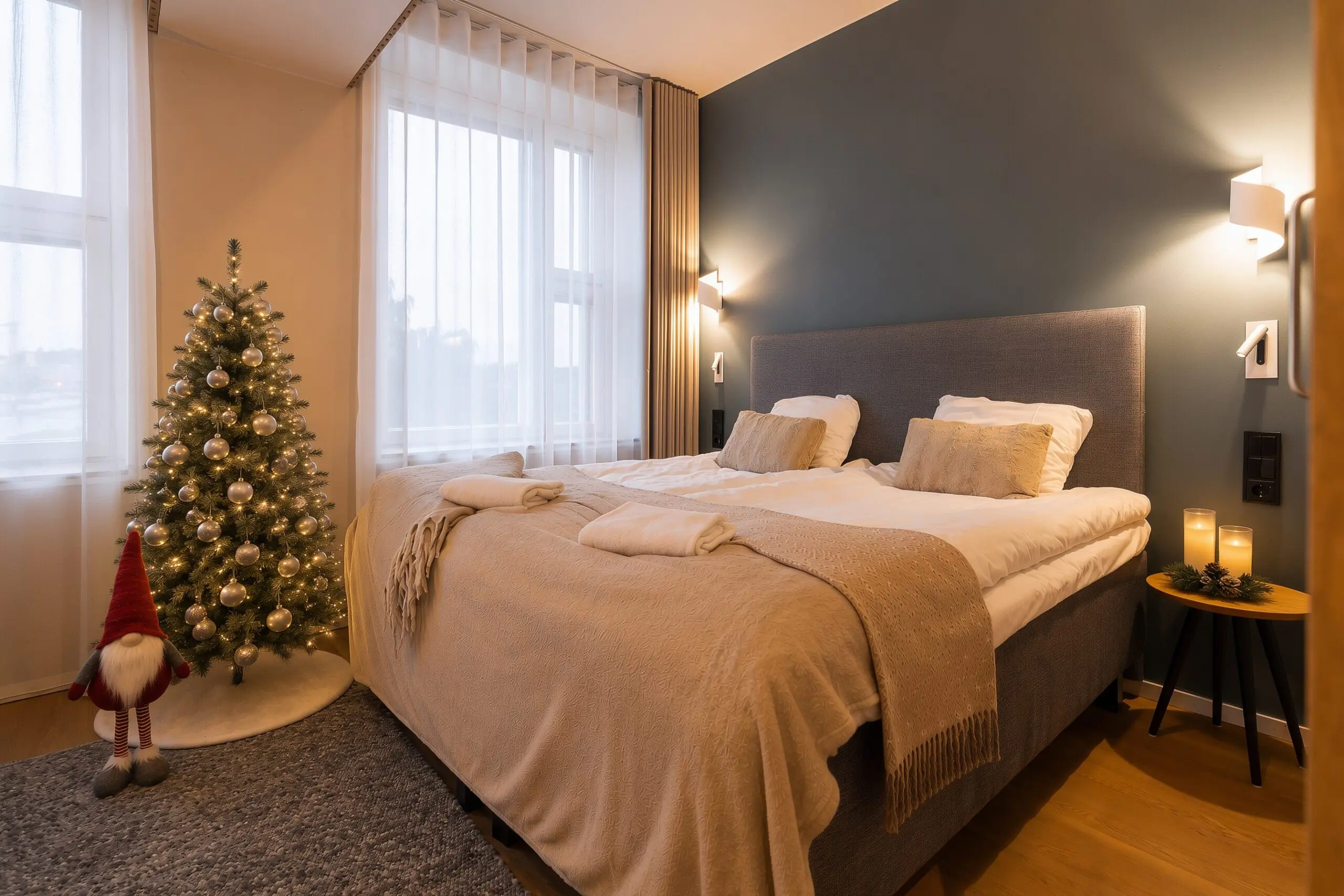
Every December our guests ask the same thing when they see the small figures in red pointed caps in shop windows and hotel lobbies across Rovaniemi: who is the tonttu, the Finnish elf, and is it the same as Santa’s elf? The short answer is that it is both — and that the cheerful Christmas version is much younger than its ancestors.
We work with Christmas in Lapland every winter, so we wanted to tell the story properly. Everything below about folklore comes from the Finnish Literature Society (SKS) and Finland’s official country and travel sites, listed at the end.
In short: a tonttu is a small guardian spirit of Finnish folk belief. The word comes from the Swedish tomte. Older tonttu looked after the home, the sauna or the mill, loved peace and order, and could take revenge if treated badly. The Christmas elf, joulutonttu, came to Finnish Christmas only in the 1800s, via Sweden from Denmark, and today it is known as Joulupukki’s helper — small, in a red cap, watching whether children are good and helping to make and deliver gifts.
At a glance
- From: 399 €
- Experience type: Christmas Package
- Included: Decorated Christmas tree; Minimal Festive elements; LED candles; Glögi bar supplies; Finnish Christmas Snacks
StayLapland · From 399 €
Book Early the Activities for Winter 2026–2027 – Save 10% with code EARLY27 01.11.2026–31.03.2027 (Excludes husky & reindeer tours)
Where the word tonttu comes from
According to the Finnish Literature Society’s folklore service Tietävä, the Finnish word tonttu comes from the Swedish word tomte, which refers both to the household spirit and to the plot of land a house stands on. That double meaning says a lot: the tonttu was tied to a place — a farmstead, a building, a particular hearth — rather than roaming freely.
Finnish folk belief also uses the wider word haltija for guardian spirits, and the two appear side by side in old accounts. One account from 1935, preserved in the SKS archives, describes how supper on Christmas Eve had to be eaten early and food was left on the table overnight so that the tonttu and haltija spirits could come and eat.

The old tonttu: guardians of home, sauna and mill
Before any tonttu helped Santa, each one had a job. Tietävä describes several kinds:
- Kodinhaltija, the guardian of the home, which protected the household and often lived near the oven.
- Saunatonttu, the sauna elf, which made sure people behaved properly in the sauna.
- Myllytonttu, the mill elf, which looked after the mill.
These tonttu loved peace, order and tidiness. It paid to treat them well: if a tonttu became angry, it could take revenge in some terrible way. Writing for the Finnish Literature Society, Heikki Saure notes that the SKS archives even hold accounts of violent behaviour attributed to sauna spirits — a long way from the friendly elves on today’s Christmas cards.
A plate of porridge on Christmas night
The best-known custom connecting the old tonttu to Christmas is food. The SKS blog records that a plate of porridge was taken to the tonttu on Christmas night. Together with the 1935 account of food left on the table overnight, it shows the logic of the old belief: the household spirit was a member of the house that had to be kept content, especially at the turn of the year.
Porridge is still at the heart of the Finnish Christmas. Visit Finland notes that the traditional Christmas Eve breakfast is rice pudding, and that Christmas Eve — not Christmas Day — is the main event of the Finnish holidays and the night Santa brings gifts to children.
StayLapland · From 249 €
1,5 hours · Very easy · Cut off: 12 hours before start time
Book Early the Activities for Winter 2026–2027 – Save 10% with code EARLY27 01.11.2026–31.03.2027 (Excludes husky & reindeer tours)
How the Christmas elf arrived in the 1800s
The joulutonttu, the Christmas elf, is a newcomer to the tonttu family. Tietävä states that it arrived in the Finnish Christmas only in the 1800s, via Sweden from Denmark. In his SKS article, Heikki Saure writes that the Christmas elf became common in the late 1800s and was so new that even Elias Lönnrot, the compiler of the Kalevala, did not know it. He also dates some of the first busy Christmas elves seen in Finland to the Christmas season of 1881.
The new elf borrowed the look of the old household spirits — the pointed cap and the small size — but not their temper. It became a gentler figure that suited children and the family Christmas that was taking shape at the same time.
Joulupukki, the Christmas goat, and his helpers
The elves’ boss has an unusual name. As Finland’s official country site explains, joulupukki means “Christmas goat” and has its roots in old traditions such as the nuuttipukki, a horned figure dressed in furs who visited homes after Christmas asking for leftover food and drink. Santa’s original home, the same source says, is Korvatunturi, a remote fell in Finnish Lapland north of the Arctic Circle. Santa used to be pictured in dark robes and rather frightening; only in the early 1900s did he become the cheerful man in red, and a photograph from 1937 already shows him in a Finnish shop with an elf at his side.
Today the tonttu is Joulupukki’s helper. Tietävä sums up the modern role: tonttu are small creatures in red caps who keep an eye on whether children are good or naughty, make presents and help Santa deliver them. Santa’s companion, Joulumuori (Mother Christmas), works with the elves too.
How the tonttu shows up on our tours and stays
We do not stage folklore lectures, but the tonttu is part of how we run Christmas in Rovaniemi. On our Magical Private Santa Visit (from 249 €, 1.5 hours), a personal Santa’s Elf accompanies your family for the whole experience, from pick-up to drop-off, to Santa’s Secret Hide-out, where you have an exclusive 30-minute private meeting with Santa Claus with warm berry juice and cookies and a special gift for each child.
If you would rather bring the Christmas spirit into your own room, our Elf’s Christmas Package (from 399 €) prepares your accommodation before you arrive with a decorated Christmas tree, minimal festive elements, LED candles, glögi bar supplies and Finnish Christmas snacks — glögi being, as Visit Finland puts it, the favourite hot drink of the Finnish Christmas. Ask us when booking which accommodation the package can be arranged for.
Guests staying at Postmaster Hotel or Aurora Hill Resort can also book the Private Santa’s Surprise visit (from 199 €), a 15-minute visit from Santa to your room, and families who want the classic day out can join our Santa Claus Village Tour (from 169 €, 5 hours). You will find them all on our Santa Claus activities page, and our guide to meeting Santa Claus in Rovaniemi explains the options in more detail.
Keeping the tonttu happy at home
If you want to borrow one old custom for your own Christmas, the folklore makes it easy: keep the house tidy and peaceful, as the tonttu liked it, and leave a small bowl of porridge out on Christmas night. It costs nothing, children love it, and it links a modern Christmas holiday in Lapland to a belief that is centuries older than the red-suited Santa. If you are planning a winter trip, our note on how our book-early winter code works explains the season’s booking offer.
Frequently asked questions
What is a tonttu?
A tonttu is a small guardian spirit of Finnish folk belief. Older tonttu protected the home, the sauna or the mill; the modern Christmas tonttu is Joulupukki’s helper.
Where does the word tonttu come from?
According to the Finnish Literature Society, it comes from the Swedish word tomte, which refers both to the household spirit and to a plot of land.
When did the Christmas elf appear in Finland?
The Christmas elf, joulutonttu, arrived in Finnish Christmas in the 1800s via Sweden from Denmark and became common in the late 1800s.
What is a saunatonttu?
The sauna elf of Finnish folk belief, which made sure people behaved properly in the sauna.
Why do Finns leave porridge for the tonttu?
In the old tradition a plate of porridge was taken to the tonttu on Christmas night to keep the household spirit content.
Can we meet one of Santa’s elves in Rovaniemi?
Yes. On our Magical Private Santa Visit a personal Santa’s Elf accompanies your family from pick-up to drop-off.
Ready to book?
StayLapland · From 399 €
Book Early the Activities for Winter 2026–2027 – Save 10% with code EARLY27 01.11.2026–31.03.2027 (Excludes husky & reindeer tours)
Questions before you book? Email booking@staylapland.com or WhatsApp us on +358 40 128 7846.
You may also like
- Magical Private Santa Visit — from 249 €, 1,5 hours
- Santa Claus Village Tour — from 169 €, 5 hours
- Private Santa’s Surprise visit — from 199 €, 15 minutes
Sources
- Tonttu — Tietävä, Finnish Literature Society (SKS)
- Joulutonttu sai vaikutteita ikivanhoista tontuista — Heikki Saure, Finnish Literature Society (SKS)
- Yes, Santa Claus is from Finland: Ten top facts about Father Christmas — thisisFINLAND
- Experience Christmas in Finland — Visit Finland