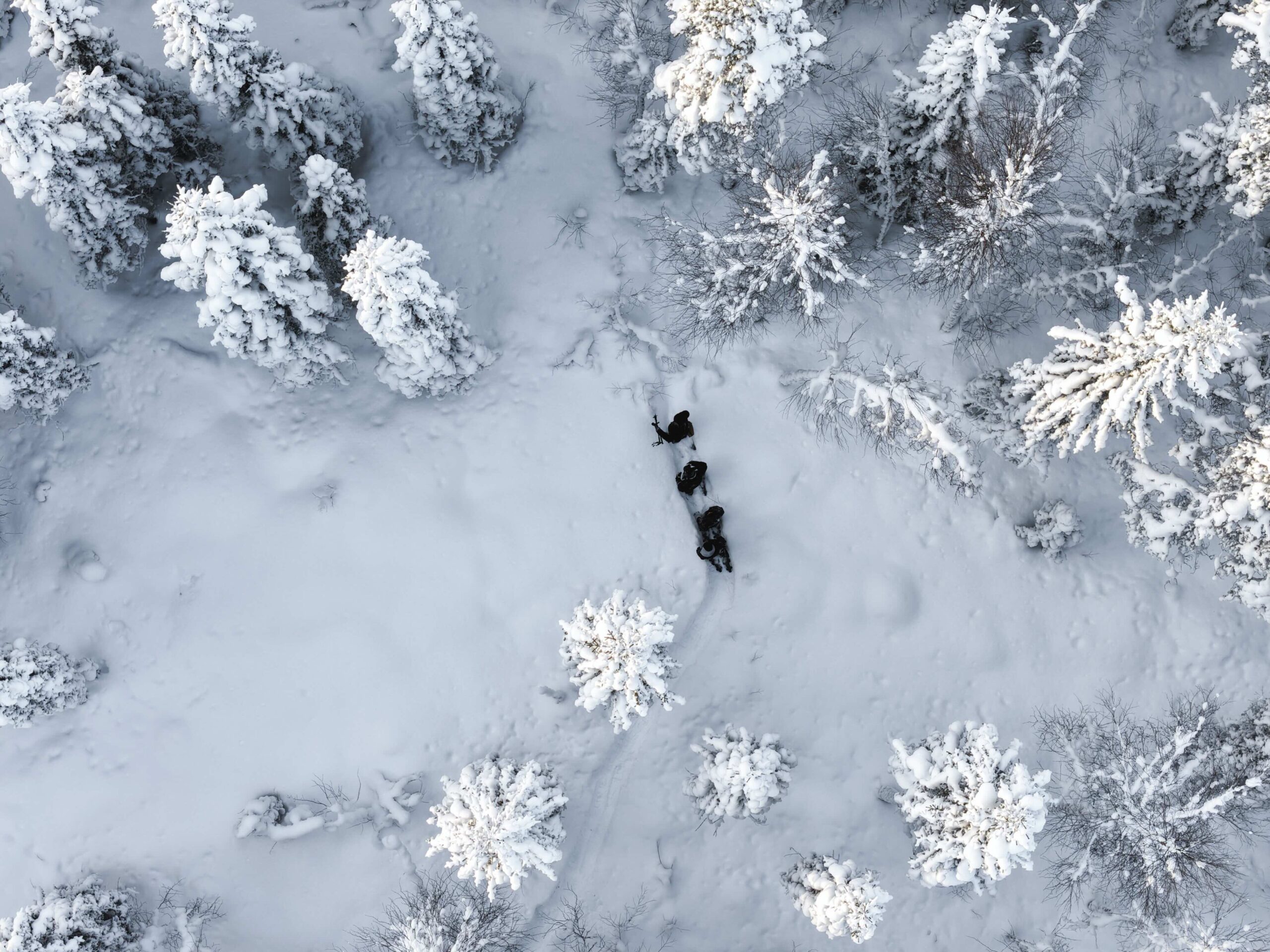
“How cold does it actually get?” is one of the questions we hear most from guests planning a winter in Rovaniemi. The honest answer is that it depends a great deal on the day, and even on which side of town you are standing. The extremes, though, are well documented by the Finnish Meteorological Institute (FMI), which measures temperatures at several stations around Rovaniemi.
Below we go through the coldest and warmest readings in FMI’s station data for Rovaniemi, put them next to Finland’s national records, and explain what the numbers mean in practice – including how we dress and plan our own tours for the cold.
In short: in the Finnish Meteorological Institute’s open daily data for the Rovaniemi Apukka station (1959–2025), the lowest temperature is −47.5 °C on 28 January 1999. The highest reading at any of the three Rovaniemi stations we looked at is 32.2 °C, at the Rovaniemi railway station on 17 and 18 July 2018. For comparison, Finland’s national records are −51.5 °C (Kittilä Pokka, 28 January 1999) and 37.2 °C (Liperi, Joensuu airport, 29 July 2010).
At a glance
- From: 89 €
- Experience type: Snowshoeing / Nature tours
- Duration: 3,5 hours
- Difficulty: Easy
- Book in Advance: Cut off: 3 hours before start time
- Included: Snowshoes & Ski Poles; A Tour Guide in English (other languages available on request: Spanish, Portuguese, French, Italian, German & Finnish. PLEASE NOTE LIMITED AVAILABILITY FOR OTHER LANGUAGES) If another language is required. Please send us an email or WhatsApp after booking.; A traditional Teepee; Winter clothing (Adult & Child size), overalls, boots & gloves; Local Snacks & Drinks; Pick-ups and drop-offs are included in the price in 10 km radius from Rovaniemi city center; Information about Finnish nature; Photos taken with your own device; Air conditioned car
- Cancellation: Free cancellation 24 hours before the activity. We will charge a cancellation fee of 100% if booking is cancelled less than 24 hours before the activity.
- Accessibility: Not wheelchair accessible; Not stroller accessible; Not recommended for children under 7 years old
StayLapland · From 89 €
Snowshoeing Tour in the Private Kuoksa Wilderness
3,5 hours · Easy · Cut off: 3 hours before start time
#bokun_acf83475_4203_2d42_9be2_39950ab4dcf1 { display: inline-block; padding: 10px 20px; background: #408C3D; border-radius: 5px; box-shadow: none; font-weight: 600; font-size: 16px; text-decoration: none; text-align: center; color: #FFFFFF; border:none; cursor: pointer; transition: background .2s ease; } #bokun_acf83475_4203_2d42_9be2_39950ab4dcf1:hover{ background: #285726; } #bokun_acf83475_4203_2d42_9be2_39950ab4dcf1:active{ background: #30682e; }Book Early the Activities for Winter 2026–2027 – Save 10% with code EARLY27 01.11.2026–31.03.2027 (Excludes husky & reindeer tours)
Where these numbers come from
FMI publishes daily minimum and maximum temperatures for its weather stations through its open data service. For this article we downloaded the full daily series for three stations that FMI lists under Rovaniemi and looked for the extremes:
- Rovaniemi Apukka – daily data from 1959 to 2025
- Rovaniemi railway station (Rovaniemi rautatieasema) – from 1997 to 2025
- Rovaniemi Airport (Rovaniemi lentoasema) – from 1998 to 2025 in the open daily data
One important caveat: these are the extremes in the open daily data as published in 2026, not an official list of station records. FMI keeps its own register of station records for more than 200 stations, and where older measurements or different station set-ups exist, the official figures can differ. The national records quoted in this article are FMI’s official ones from its temperature records page.
The coldest days measured in Rovaniemi
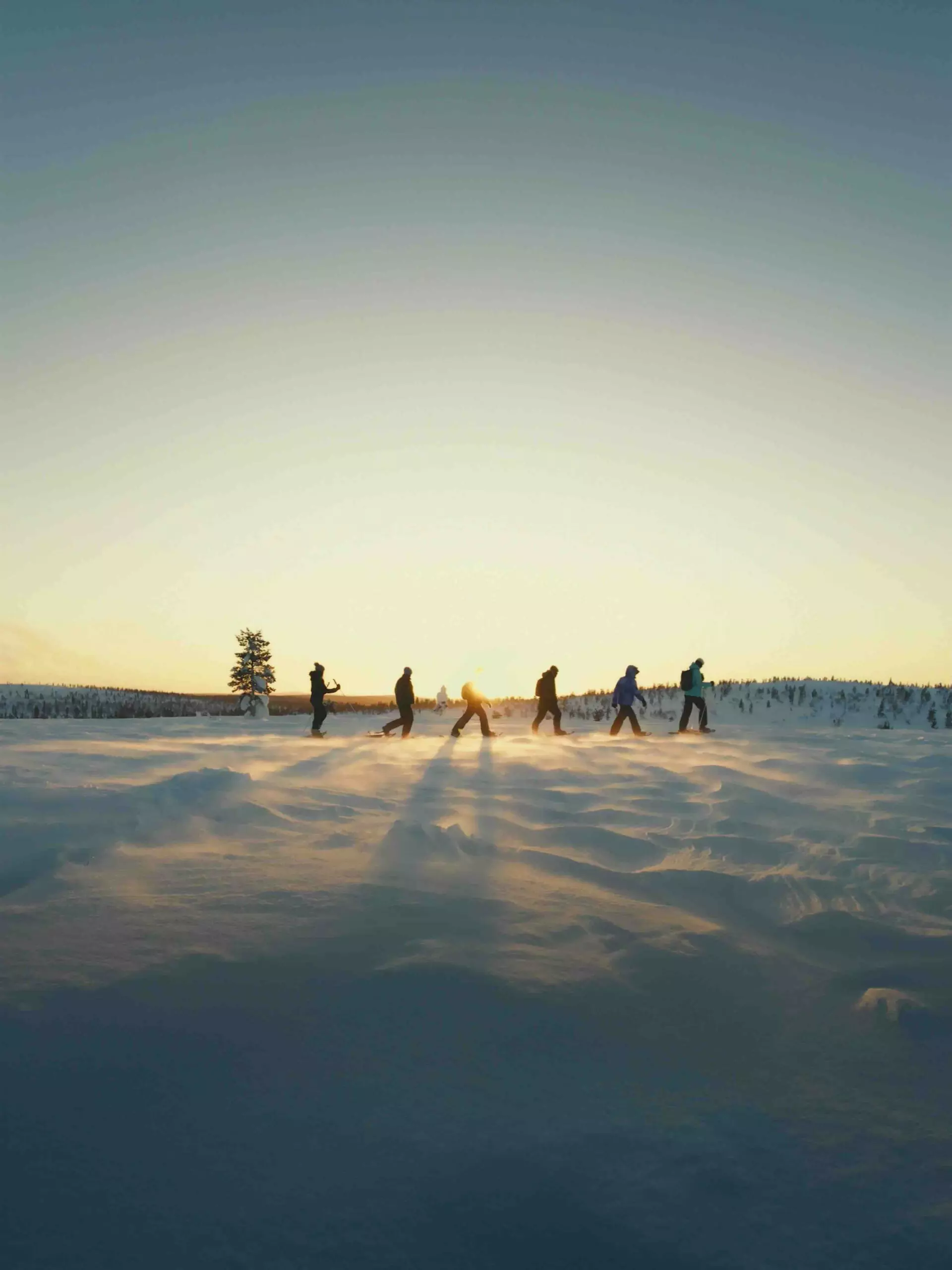
All three stations recorded their lowest temperature in the same cold spell, on 28 January 1999:
- Rovaniemi Apukka: −47.5 °C
- Rovaniemi railway station: −42.8 °C
- Rovaniemi Airport: −38.1 °C
That was the same day Finland set its national low of −51.5 °C at Pokka in Kittilä. According to FMI, northern and central Lapland had frosts of 45–50 degrees for about a week at the end of January 1999.
At Apukka, the next coldest readings in the series after the 1999 cold spell are from February 1966 (−44.3 °C on 9 February). Readings of −40 °C or colder have been rare in recent decades: between 1996 and 2025 they occurred at Apukka in only two years, and not since 1999.
The warmest days measured in Rovaniemi
Rovaniemi also has proper summer heat on some days. The highest readings in the same data are:
- Rovaniemi railway station: 32.2 °C on 17 and 18 July 2018
- Rovaniemi Apukka: 31.2 °C on 10 June 2011 and 17 July 2018
- Rovaniemi Airport: 31.0 °C on 19 July 2018
So the difference between the coldest and the warmest reading at a single Rovaniemi station, Apukka, is almost 79 degrees. Finland’s national heat record, 37.2 °C, was measured further south, at Joensuu airport in Liperi on 29 July 2010.
StayLapland · From 139 €
Korouoma Frozen Waterfalls Hike
6 hours · Challenging · Cut off: 3 hours before start time
#bokun_473ff272_e5ca_2442_07db_41d83ac4ab0b { display: inline-block; padding: 10px 20px; background: #408C3D; border-radius: 5px; box-shadow: none; font-weight: 600; font-size: 16px; text-decoration: none; text-align: center; color: #FFFFFF; border:none; cursor: pointer; transition: background .2s ease; } #bokun_473ff272_e5ca_2442_07db_41d83ac4ab0b:hover{ background: #285726; } #bokun_473ff272_e5ca_2442_07db_41d83ac4ab0b:active{ background: #30682e; }Book Early the Activities for Winter 2026–2027 – Save 10% with code EARLY27 01.11.2026–31.03.2027 (Excludes husky & reindeer tours)
Why stations a few kilometres apart disagree
On the night of the record, the Apukka and airport stations were more than 9 degrees apart. Differences like this are part of Lapland’s winter climate. FMI explains that on calm, clear nights an inversion can form: colder air stays trapped near the ground beneath warmer air above, so the temperature rises with height instead of falling. The strongest inversions form after calm, clear nights.
In practice this means the exact spot matters. On a still, starry winter night it can be noticeably colder in low-lying open places than a short drive away. It is one reason we never promise a particular temperature for a tour – the forecast for “Rovaniemi” is only a starting point.
How often it really gets very cold
Records are the exception, so we also looked at how often hard frost occurs. Over the 30 winters from 1996 to 2025:
- At Apukka, the temperature fell to −30 °C or lower in every single year, on around 11 days a year on average.
- At the airport, −30 °C or colder occurred in 9 of the 28 years with open daily data (1998–2025), and on fewer than one day a year on average.
Long cold spells are rarer still. FMI’s statistics for Sodankylä, north of Rovaniemi, show that between 1961 and 2024 a run of at least seven consecutive days below −25 °C occurred 54 times, but a run of at least 14 days only once. The longest lasted 26 days, from 30 January to 24 February 1985.
Finland’s national temperature records for context
FMI’s official monthly records show how far north the cold extremes sit. Almost every monthly low in Finland was measured in Lapland – Kittilä, Sodankylä, Salla or Enontekiö – including −49.0 °C in Sodankylä in February 1912 and −42.0 °C in Sodankylä in November 1915. Finland’s all-time low, −51.5 °C, belongs to Kittilä Pokka.
The monthly heat records, by contrast, were all measured outside Lapland. You can see the full table on FMI’s Lämpötilaennätyksiä page.
How this shows up on our tours
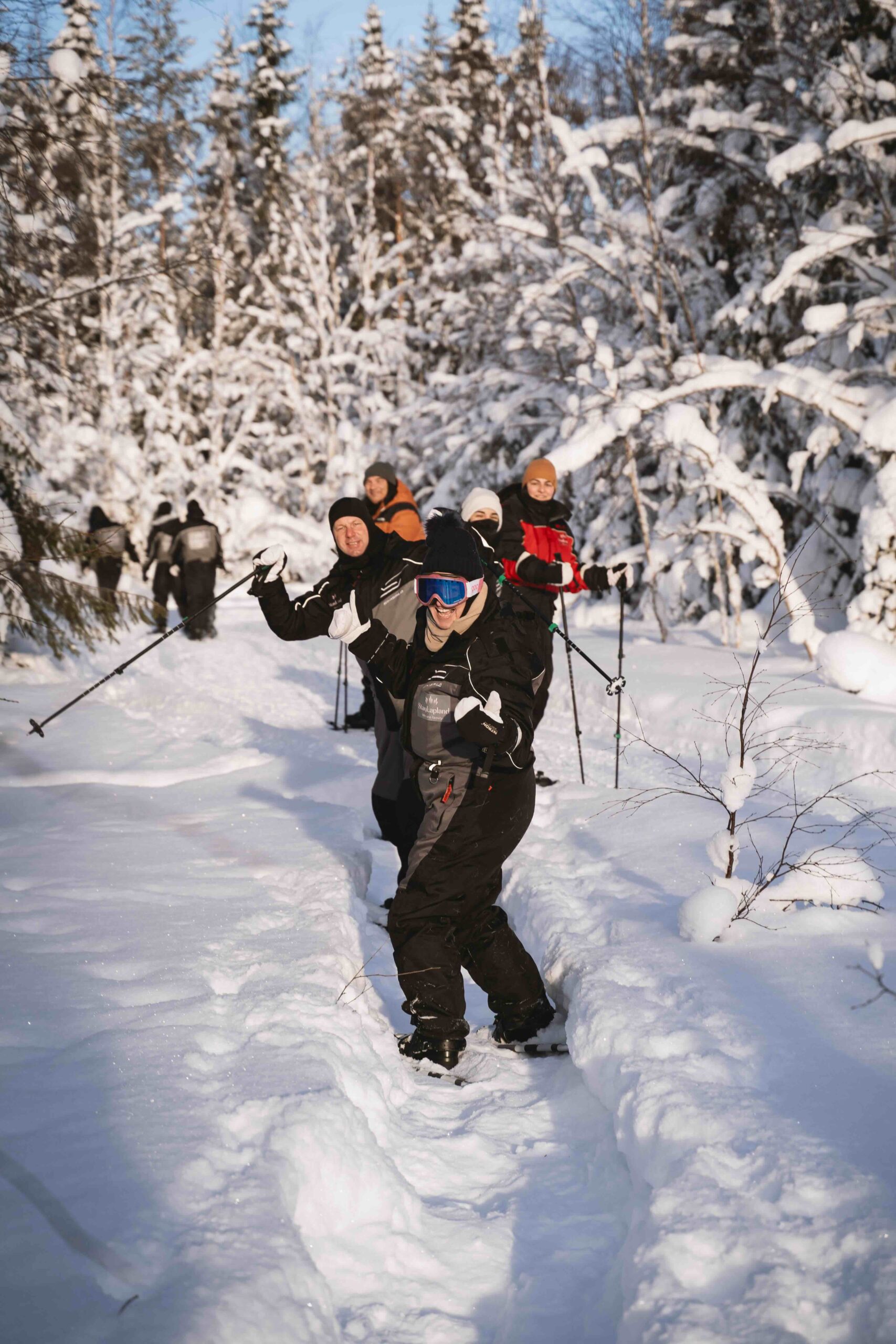
We plan every winter tour on the assumption that it can be properly cold. On our Snowshoeing Tour in the Private Kuoksa Wilderness, for example, we provide winter clothing in adult and child sizes – overalls, boots and gloves – together with the snowshoes and poles, and the tour ends with a light barbecue over a campfire and hot berry juice in a traditional teepee. The tour is rated easy and takes 3.5 hours.
We also say openly on the product page that the tour may be cancelled or rescheduled in extreme weather. That is the honest consequence of numbers like the ones above: on the rare days when it is dangerously cold, we would rather move your tour than send you out.
If you want to see winter at its most dramatic, our Korouoma Frozen Waterfalls Hike takes you to frozen waterfalls in a nature reserve, and the Ranua WildLife Zoo Park Visit shows how Arctic animals live through the same winters. All of our nature and culture tours are listed in one place.
For the sky side of winter, read our guide to the Northern Lights season 2026–2027 and our explainer on how auroras are formed.
Frequently asked questions
What is the coldest temperature ever measured in Rovaniemi?
In the Finnish Meteorological Institute’s open daily data, the lowest reading at a Rovaniemi station is −47.5 °C at Rovaniemi Apukka on 28 January 1999. The same day, the railway station measured −42.8 °C and the airport −38.1 °C.
What is the warmest temperature measured in Rovaniemi?
The highest reading in the same data is 32.2 °C at the Rovaniemi railway station on 17 and 18 July 2018.
What are Finland’s national temperature records?
According to FMI, the lowest is −51.5 °C at Kittilä Pokka on 28 January 1999 and the highest is 37.2 °C at Joensuu airport in Liperi on 29 July 2010.
Why do different Rovaniemi stations show different temperatures?
On calm, clear winter nights an inversion can form, with cold air trapped near the ground beneath warmer air. Low-lying places can then be several degrees colder than stations only a few kilometres away.
Do your tours run when it is very cold?
We provide winter clothing on our tours, but our product pages state that tours may be cancelled or rescheduled in extreme weather conditions.
Is −40 °C common in Rovaniemi?
No. Between 1996 and 2025, temperatures of −40 °C or lower occurred at the Apukka station in only two years, most recently in 1999.
Ready to book?
StayLapland · From 89 €
Snowshoeing Tour in the Private Kuoksa Wilderness
3,5 hours · Easy · Cut off: 3 hours before start time
#bokun_3b6c714b_16ed_2d28_eb1a_45628f0f9d17 { display: inline-block; padding: 10px 20px; background: #408C3D; border-radius: 5px; box-shadow: none; font-weight: 600; font-size: 16px; text-decoration: none; text-align: center; color: #FFFFFF; border:none; cursor: pointer; transition: background .2s ease; } #bokun_3b6c714b_16ed_2d28_eb1a_45628f0f9d17:hover{ background: #285726; } #bokun_3b6c714b_16ed_2d28_eb1a_45628f0f9d17:active{ background: #30682e; } #bokun_0e72a37c_450f_59f6_b5f1_5004019a7c50 { display: inline-block; padding: 10px 20px; background: #408C3D; border-radius: 5px; box-shadow: none; font-weight: 600; font-size: 16px; text-decoration: none; text-align: center; color: #FFFFFF; border:none; cursor: pointer; transition: background .2s ease; } #bokun_0e72a37c_450f_59f6_b5f1_5004019a7c50:hover{ background: #285726; } #bokun_0e72a37c_450f_59f6_b5f1_5004019a7c50:active{ background: #30682e; }Book Early the Activities for Winter 2026–2027 – Save 10% with code EARLY27 01.11.2026–31.03.2027 (Excludes husky & reindeer tours)
Questions about conditions on your dates? Email booking@staylapland.com or send us a WhatsApp message on +358 40 128 7846.
You may also like
- Korouoma Frozen Waterfalls Hike — from 139 €, 6 hours
- Ranua WildLife Zoo Park Visit — from 139 €, 5 hours
Sources
- Finnish Meteorological Institute – Lämpötilaennätyksiä (temperature records)
- Finnish Meteorological Institute – Kovat pakkaset ja kylmimmät talvet
- Finnish Meteorological Institute – Talviset inversiotilanteet
- Finnish Meteorological Institute – Open data (daily observations, stations Rovaniemi Apukka, Rovaniemi rautatieasema, Rovaniemi lentoasema)