Since 2024 our guests have been asking about the “solar maximum”: is it over, did they miss it, and does it matter for a trip to Rovaniemi this winter? It is a fair question, because the headlines made it sound like a one-season event.
We run Northern Lights evenings in Lapland every winter, but for the science we rely on the people who measure it — NASA, NOAA’s Space Weather Prediction Center and the Finnish Meteorological Institute (FMI). This is what they say, and how it shows up on our tours.
The short answer: on 15 October 2024 NASA and NOAA announced that the Sun had reached the maximum period of Solar Cycle 25. The FMI notes that the most auroras typically occur a couple of years after the sunspot maximum, and that in Lapland auroras are common in every phase of the cycle. So solar maximum is not a door that has closed: in northern Finland the sky stays worth watching in 2026–2027, as it is every winter.
At a glance
- From: 199 €
- Experience type: Northern Lights tour
- Duration: Total duration of tour is usually 4-10 hours depends on conditions of the day
- Difficulty: Easy
- Book in Advance: Cut off: 1 hours before start time
- Included: Small group 2-8 persons; Professional Northern Lights guide & photographer in English (other languages available on request: (Spanish, Portuguese, French, Italian, German & Finnish. PLEASE NOTE LIMITED AVAILABILITY FOR OTHER LANGUAGES) If another language is required. Please send us an email or WhatsApp after booking.); Winter clothing (Adult & Child size), overalls, boots, gloves, socks; Information about the Northern Lights; Pick-ups and drop-offs are included in the price in 10 km radius from Rovaniemi city center; Professional DSLR photos (delivered securely online); Air conditioned car; Northern Lights guarantee, if we don’t capture Northern Lights you get 100% your money back!; Hot drinks & light snacks; Unlimited mileage & time (typically 4–10 hours)
- Cancellation: Free cancellation 24 hours before the activity. We will charge a cancellation fee of 100% if booking is cancelled less than 24 hours before the activity.
- Accessibility: Not wheelchair accessible; Not stroller accessible
StayLapland · From 199 €
Professional Small Group Northern Lights Hunting Tour from Rovaniemi – Guaranteed
Total duration of tour is usually 4-10 hours depends on conditions of the day · Easy · Cut off: 1 hours before start time
Book Early the Activities for Winter 2026–2027 – Save 10% with code EARLY27 01.11.2026–31.03.2027 (Excludes husky & reindeer tours)
What “solar maximum” actually means
The Sun goes through a cycle of roughly 11 years. NASA describes how, at the height of each cycle, the Sun’s magnetic poles flip and it moves from a calm state to an active and stormy one. The active phase brings more sunspots — regions of intense magnetic activity that can produce solar flares and coronal mass ejections (CMEs).
When those eruptions reach Earth they can cause geomagnetic storms. Auroras are produced when charged particles from these storms collide with the upper atmosphere. More activity on the Sun therefore means more chances of strong auroral displays, and of auroras being seen further south than usual.
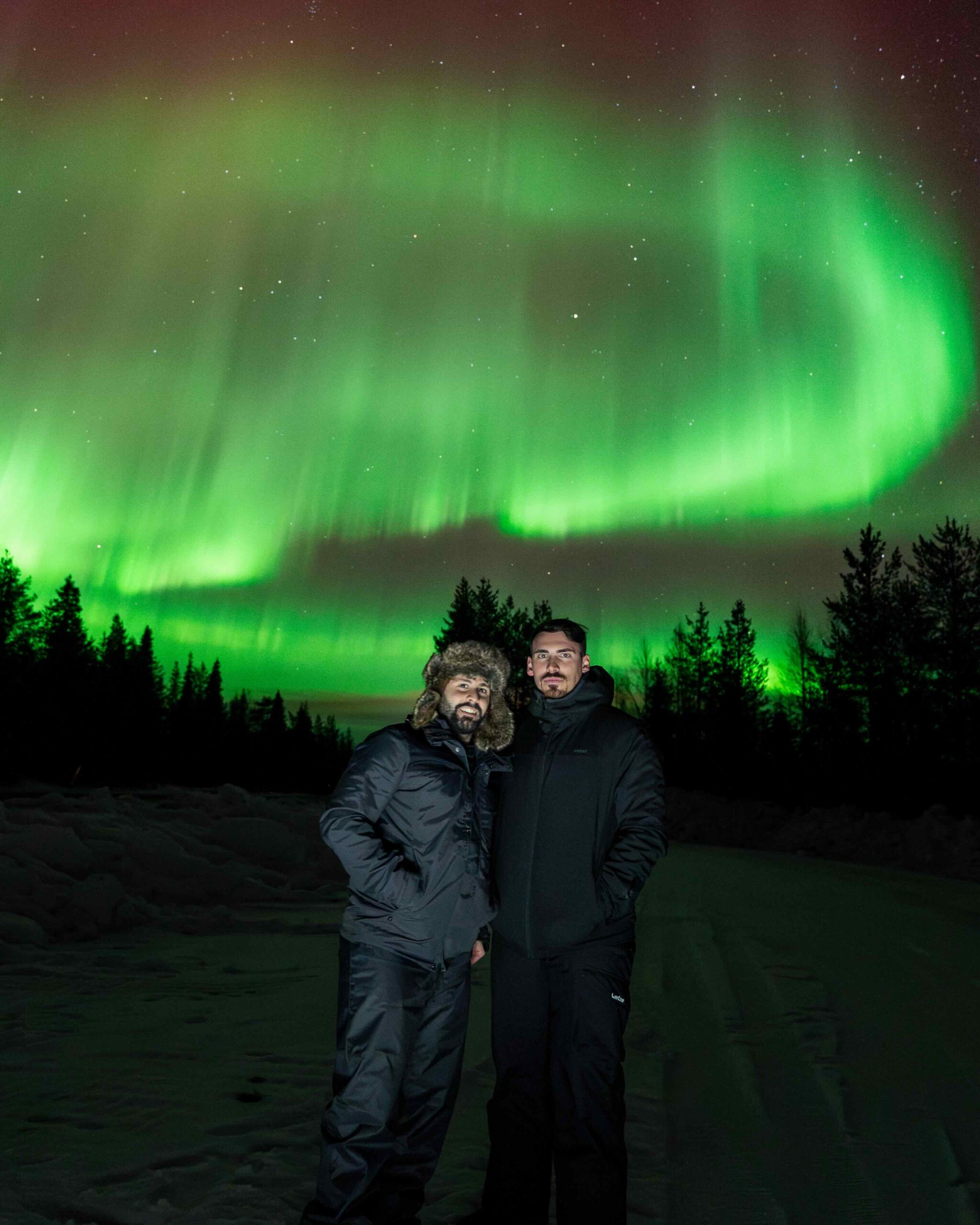
The current cycle is called Solar Cycle 25. On 15 October 2024 NASA and NOAA announced jointly that the Sun had reached its solar maximum period.
Why nobody can name the exact peak in advance
A detail that often gets lost: solar maximum is a period, not a single day. NASA explained at the announcement that scientists would not be able to determine the exact peak of this maximum for many months, because a peak can only be identified after a consistent decline has been tracked.
NASA also said the maximum period could continue for the following year, and NOAA expected additional solar and geomagnetic storms during it. Just as importantly, NASA added that — though less frequent — fairly significant storms are often seen during the declining phase of the cycle too.
In other words, the end of the peak does not switch the aurora off. Large storms remain possible for years after the headline moment.
The two-year lag the FMI describes
The Finnish Meteorological Institute has studied auroras over Finland for a long time, and its observations add an important point. According to the FMI, the number of large auroral displays tends to follow the number of sunspots with a lag of a couple of years, and the most auroras typically occur a couple of years after the sunspot maximum.
The FMI also notes that this effect is most pronounced in southern Finland. For someone in Helsinki the solar cycle makes a big difference to whether they see an aurora at all. For Lapland the picture is different, which brings us to the part that matters most for your trip.
StayLapland · From 99 €
Northern Lights Tour At The Campfire
3 hours · Very easy · Cut off: 3 hours before start time
Book Early the Activities for Winter 2026–2027 – Save 10% with code EARLY27 01.11.2026–31.03.2027 (Excludes husky & reindeer tours)
Why Lapland sees auroras in every phase of the cycle
Northern Finland lies under the auroral zone. The FMI’s figures show how much latitude matters:
- In northern Lapland around Kilpisjärvi, auroras can be seen on about 75% of clear, dark nights.
- At the northern ski resorts such as Ylläs, Levi and Saariselkä, on roughly 50% of nights.
- In central Finland (Oulu, Kuusamo), on roughly 25% of nights.
- On the south coast (Helsinki, Turku), about once a month on average.
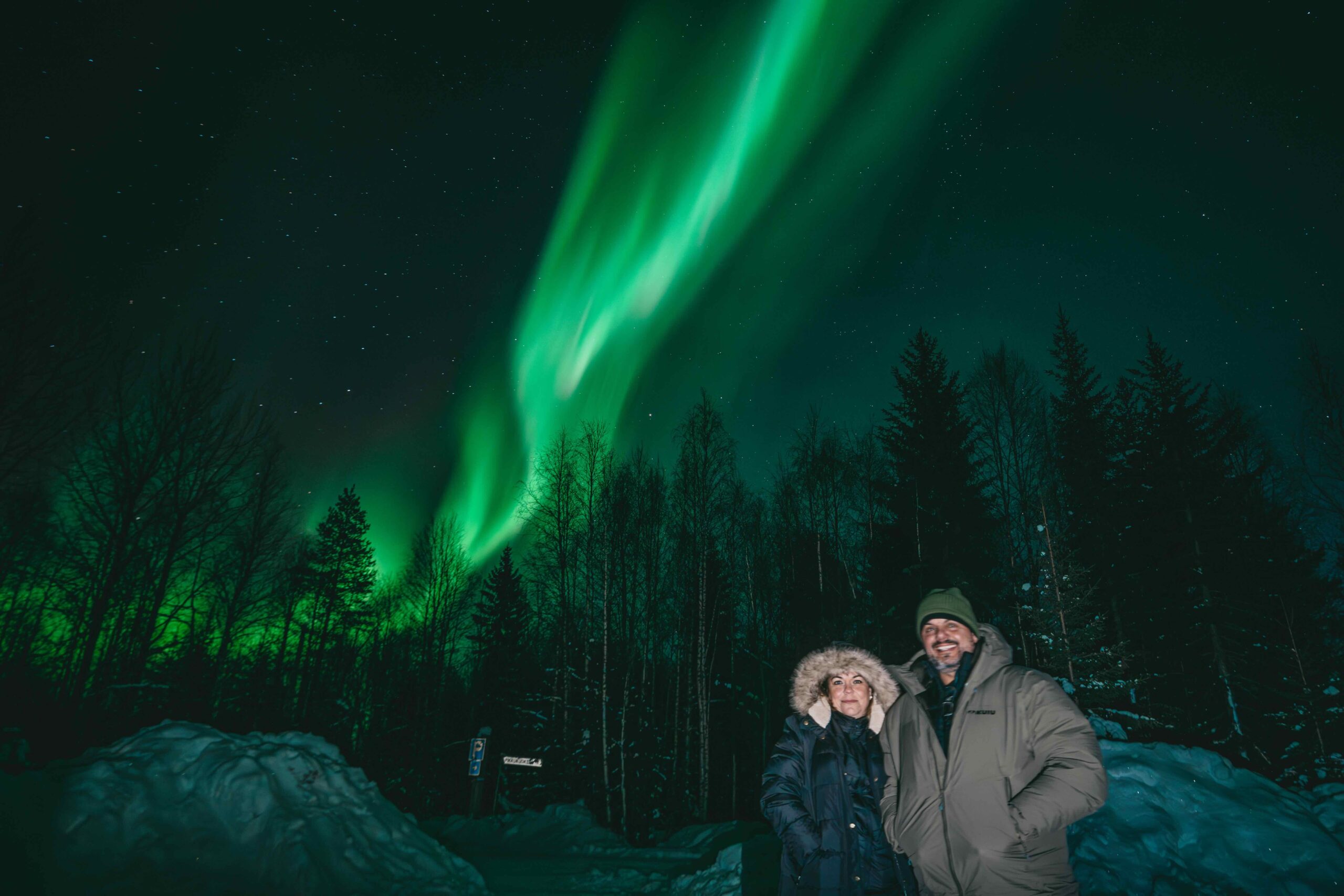
The FMI puts it simply: in Lapland auroras are quite common always, even during solar minimum. The solar cycle changes how often we get the big, sky-filling storms; it does not decide whether Lapland has auroras.
Time of night and time of year
Two other factors from the FMI are worth knowing before you book an evening:
- Time of night. The typical time for auroral displays is around midnight and a couple of hours either side. The FMI’s Finnish-language guide says the peak is around 23:30 local time, near magnetic midnight, with the probability above 50% from about 21:00 onwards.
- Time of year. Auroras occur fairly evenly through the year, but the rate is slightly higher in spring and autumn than in winter and summer. The FMI mentions March and early April as particularly good in northern Finland. You still need a dark and clear sky to see them, so the summer months with their light nights are out.
Cloud cover is the factor nobody can forecast away. That is why the weather forecast, not the solar cycle, usually decides how a single evening goes.
How this shows up on our tours
We cannot change the Sun or the clouds, but we can choose how we look for the lights. On our tour pages we state that the Northern Lights are visible in Lapland from early August until late April.
Our Professional Small Group Northern Lights Hunting Tour from Rovaniemi – Guaranteed (from 199 €) is built around the science above. There is no fixed viewpoint. Each evening our guides study cloud forecasts, weather conditions and aurora activity, and choose the direction with the best chance of clear skies. You travel in a small group of 2–8, a professional guide and photographer takes DSLR photos of you under the lights, and if we do not capture the Northern Lights you get 100% of your money back.
A few practical points from the tour page: the start time can vary between 17:00 and 21:00 and is confirmed by email by 14:00; the duration depends on the conditions of the night; please bring your passport; and photos are delivered within 2–3 business days. As the page also says, the Northern Lights look stronger on camera than to the naked eye, and aurora hunting involves a lot of driving and waiting, so patience is part of it.
If you prefer a set place and a shorter evening, our Northern Lights Tour At The Campfire (from 99 €, 3 hours) takes you to our own land at Kuoksa Wilderness Park, away from the city lights. The Professional Guaranteed Northern Lights Hunting Tour from Rovaniemi by Bus (from 109 €) is the guaranteed hunt in a larger group. All of them are on our Northern Lights activities page.
Keep learning before you travel
If you want to understand what happens in the sky before you arrive, start with our guide to how auroras are formed and our notes on where to see the Northern Lights. Both the FMI and NOAA’s Space Weather Prediction Center publish aurora and space weather information online; the pages we used are listed in the sources below.
Our honest summary: solar maximum is good news, and the period after it can be good news too. But in Lapland the bigger questions on any given night are darkness, clouds and where you stand. Those are the parts we can help with.
Frequently asked questions
Has the solar maximum already passed?
NASA and NOAA announced on 15 October 2024 that the Sun had reached the maximum period of Solar Cycle 25. The exact peak can only be confirmed after a consistent decline, and NASA notes that significant storms are still often seen in the declining phase.
Is 2026–2027 still a good season for the Northern Lights in Lapland?
According to the FMI, the most auroras typically occur a couple of years after the sunspot maximum, and in Lapland auroras are common even during solar minimum. Clear, dark skies matter most on any single night.
How often can you see auroras in Lapland?
The FMI says auroras can be seen on about 75% of clear, dark nights in northern Lapland around Kilpisjärvi, and on roughly 50% of nights at the northern ski resorts.
What time of night is best?
The FMI gives midnight and a couple of hours either side as the typical time, with a peak around 23:30 local time.
Do you guarantee a sighting?
On our guaranteed hunting tours, yes: if we do not capture the Northern Lights you get 100% of your money back. Our campfire and cottage evenings go to a fixed spot and cannot guarantee a sighting.
Do I need to bring anything on the hunting tour?
Please bring your passport and give us your email address so we can send you the photos. Warm winter clothing is included.
Ready to book?
StayLapland · From 199 €
Professional Small Group Northern Lights Hunting Tour from Rovaniemi – Guaranteed
Total duration of tour is usually 4-10 hours depends on conditions of the day · Easy · Cut off: 1 hours before start time
Book Early the Activities for Winter 2026–2027 – Save 10% with code EARLY27 01.11.2026–31.03.2027 (Excludes husky & reindeer tours)
Questions before you book? Email booking@staylapland.com or send us a WhatsApp on +358 40 128 7846.
You may also like
- Northern Lights Tour At The Campfire — from 99 €, 3 hours
- Northern Lights Tour in Atmospheric Cottage — from 109 €, 3 hours
- Professional Guaranteed Northern Lights Hunting Tour from Rovaniemi by Bus — from 109 €, Total duration of tour is usually 4-5 hours depends on conditions of the day
Sources
- NASA — NASA, NOAA: Sun Reaches Maximum Phase in 11-Year Solar Cycle
- NOAA Space Weather Prediction Center — Joint Solar Maximum Announcement from NASA and NOAA
- Finnish Meteorological Institute — Auroras in Finland
- Ilmatieteen laitos — Missä ja milloin revontulia havaitaan?